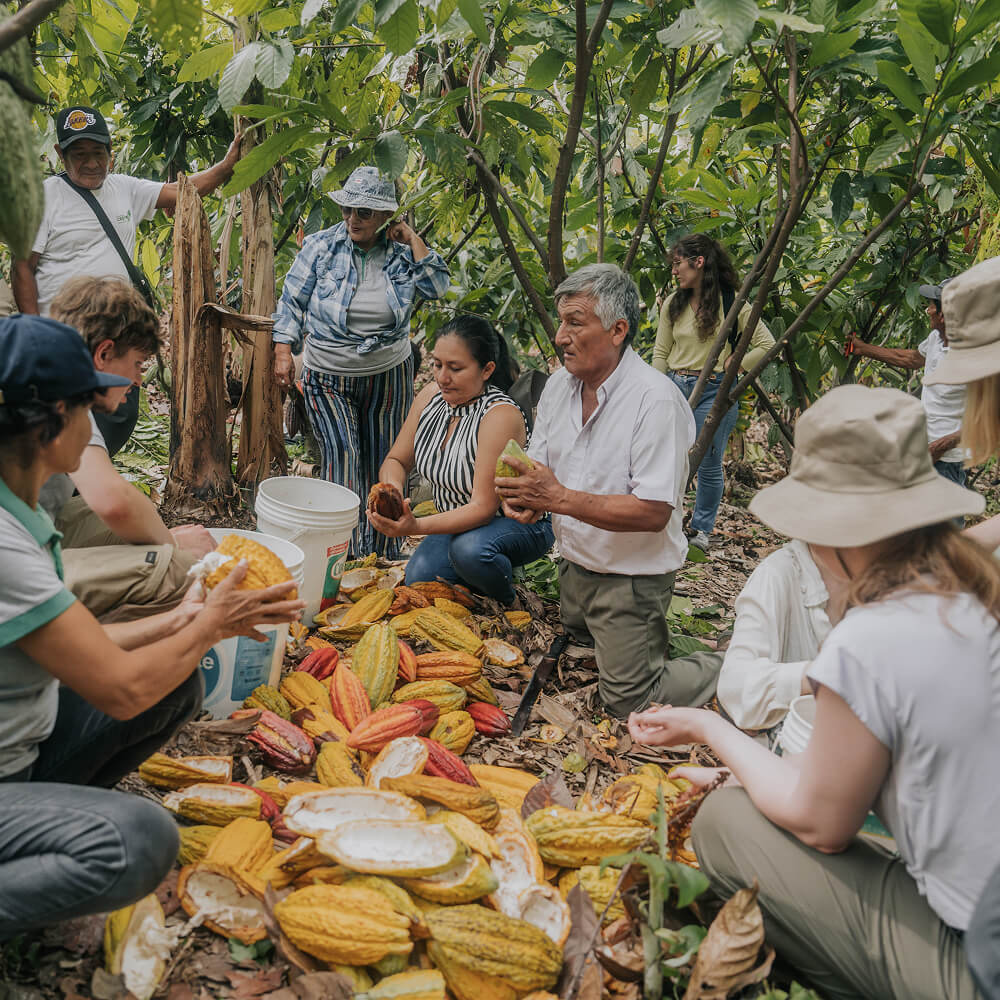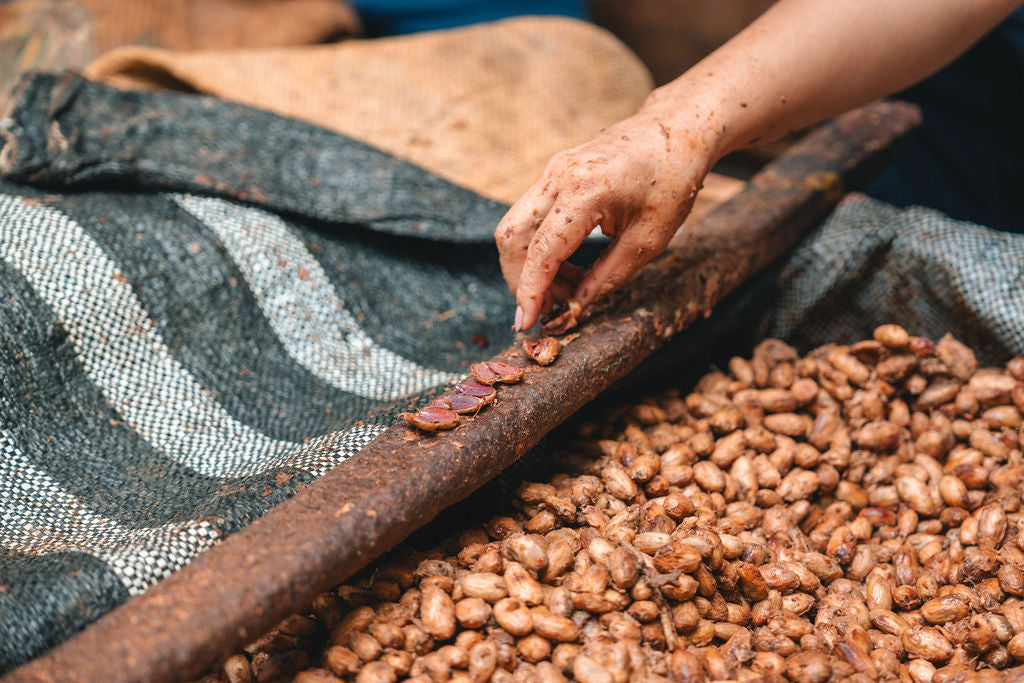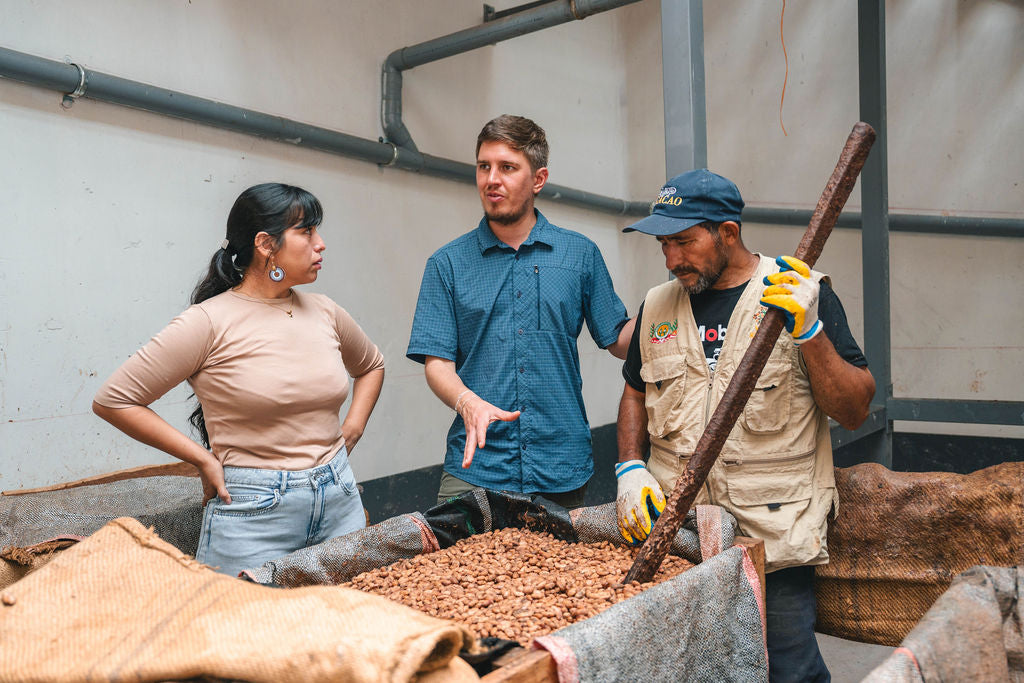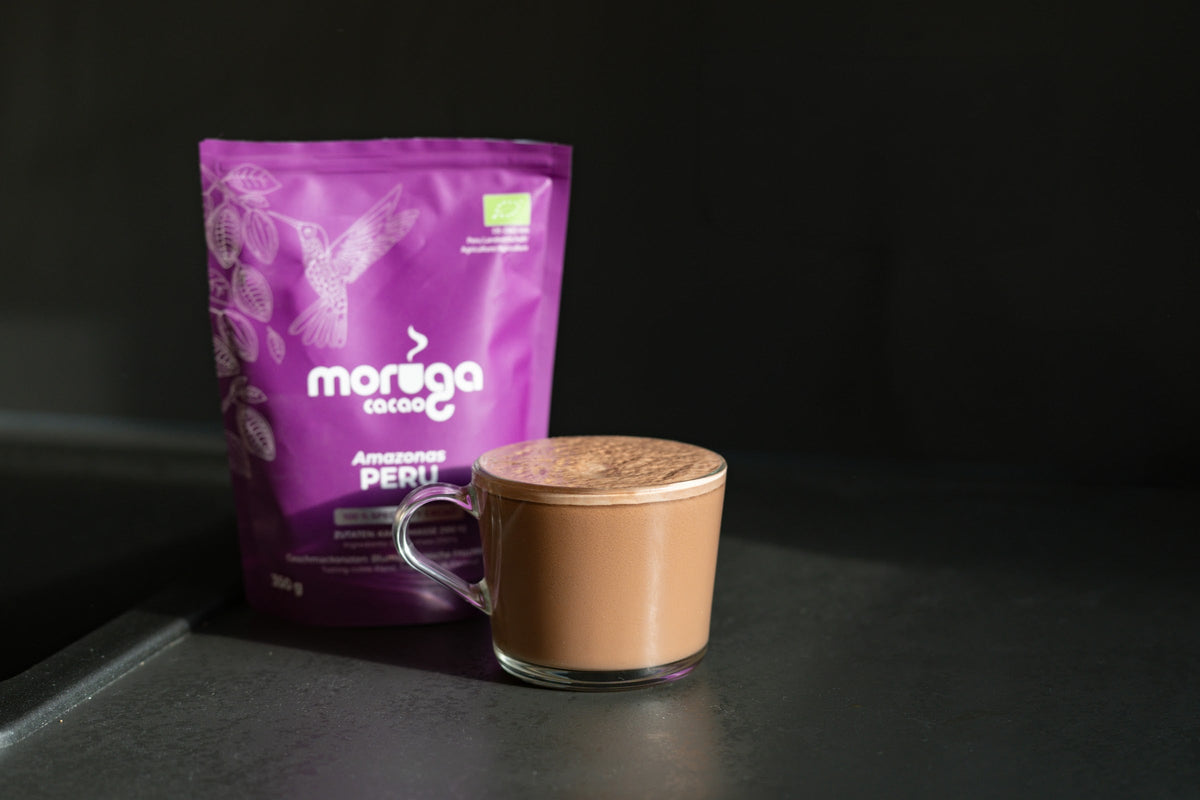




Sustainable cacao production is not only a sourcing topic for Moruga. It is part of the product itself. Good 100% cacao depends on healthy ecosystems, skilled fermentation, careful drying and long-term relationships with people who know the crop deeply.
This article is an updated version of our early perspective on sustainable cacao. The core idea still holds: a race to the top of quality can support more ecological, social and economic value in cacao-growing regions.
Quality and sustainability belong together
With 100% cacao, poor raw material is hard to hide. There is no sugar, no milk powder and no flavoring to cover weak cacao. That makes quality a practical sustainability signal: careful growing, fermentation and drying matter directly in the cup.
If you want to compare current Moruga origins, start with Moruga cacao varieties.
Why origin transparency matters
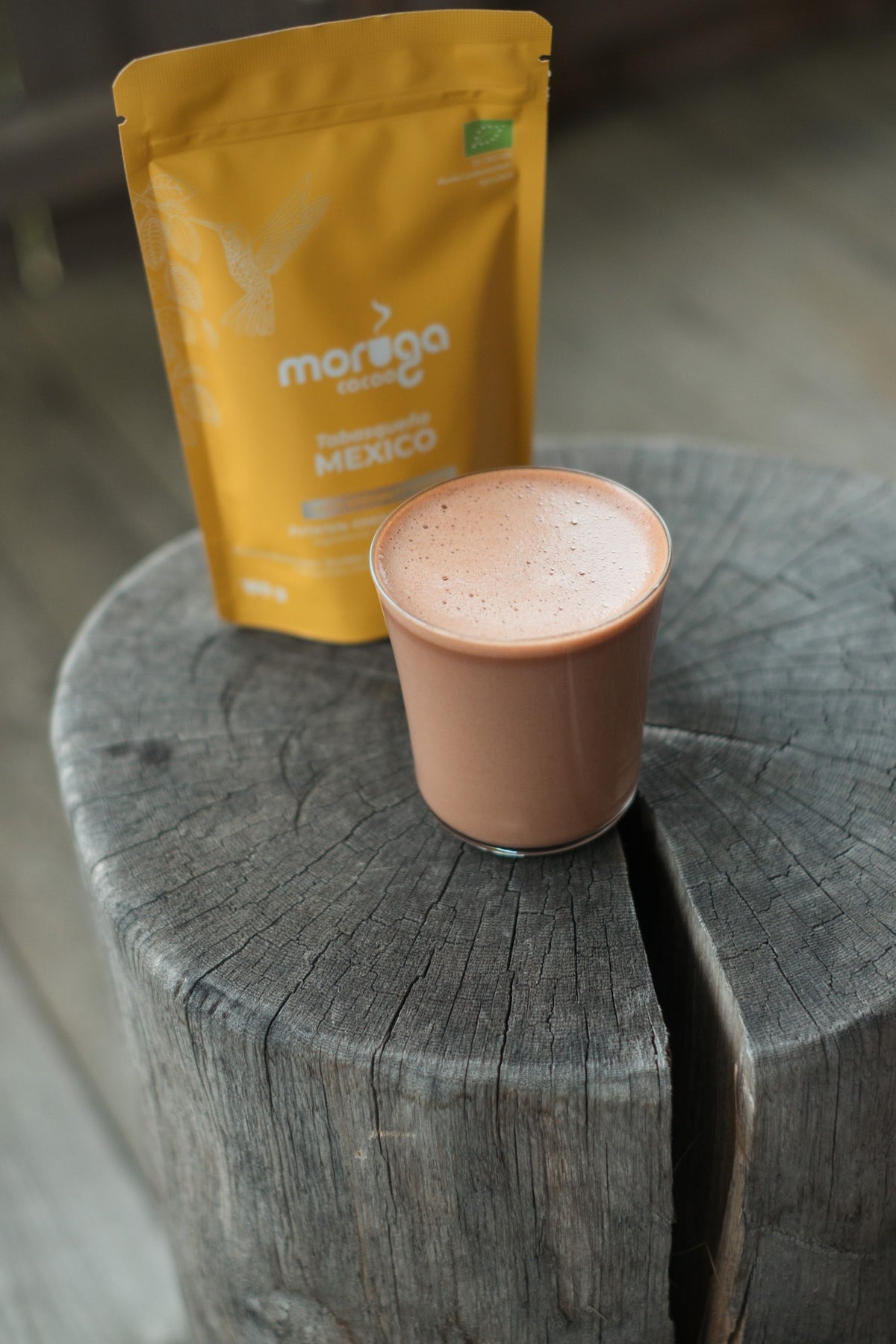
Cacao should not be an anonymous commodity. The more clearly an origin is named, the easier it becomes to talk about flavor, farming context and responsibility. This is why our current range is built around specific origins such as Peru, Mexico, Tanzania and Colombia.
You can explore examples on Chuncho from Peru, Tabasqueño from Mexico, Udzungwa from Tanzania and Arhuaco from Colombia.
Agroforestry, biodiversity and flavor
Ecologically richer growing systems can support biodiversity, soil quality and more resilient farming. For cacao drinkers, this is not abstract. Origin, landscape, fermentation and processing shape aroma, texture and the way cacao feels in daily use.
That is why we prefer clear origin information and quality transparency over generic claims.
Transparency in the current Moruga store
Sustainability claims should be backed by concrete information. For current quality and safety transparency, see Moruga lab tests. For buying decisions, read buy cacao: how to choose 100% cacao.
If you are new to Moruga and want to compare several profiles, the Moruga Starter Kit is the easiest entry point.
Conclusion
For Moruga, sustainable cacao is not a separate marketing layer. It is connected to taste, origin, transparency and long-term quality. Better cacao should mean better information, better sourcing decisions and a better cup.