




The journey of a cacao bean: commodity cacao vs. specialty cacao
If you want to understand why cacao can taste so different, you should not start with finished chocolate or cacao powder. The decisive differences arise much earlier: on the farm, directly after harvest, during fermentation, drying and later selection.
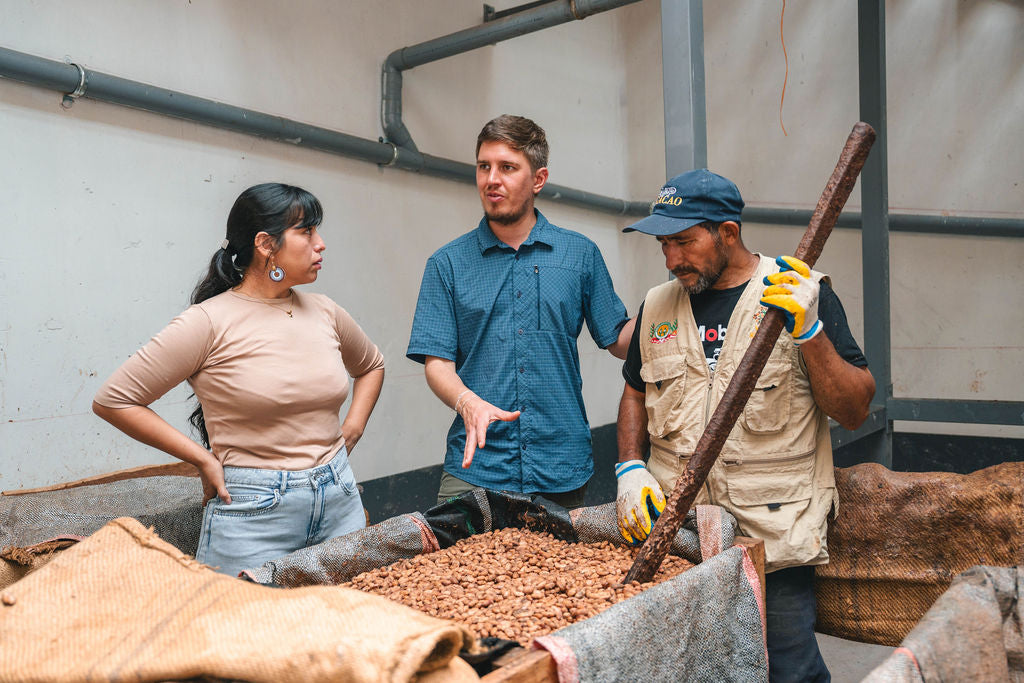
I have just returned from Peru. And as after every trip, being there made it even clearer to me why we built Moruga in the first place: because cacao quality is not decided in marketing, but in every single step of the value chain.
On many farms, there is a very simple image for this. Two buckets.
One holds the good, clean, flawless beans.
The other holds beans that are damaged, spoiled, moldy or otherwise defective.
What many people do not know: this second category does not automatically disappear from the system. A large share of such goods still ends up in anonymous mass flows on the world market. And from exactly that, a substantial part of conventional chocolate and cacao powder later found on shelves is made.
In heavily processed products, a lot can be hidden. Sugar, milk powder, roasting aromas, vanilla or other additives can cover up flaws. With pure cacao, that is not possible. 100% cacao shows how carefully, or carelessly, the chain was handled.
That is why quality for us does not begin at the end, but with the bean.
The journey of an ordinary cacao bean
Large parts of the global cacao market are built around volume, standardization and low cost. That is understandable from an industrial perspective, but it has consequences for aroma, care and traceability.
An ordinary cacao bean from the mass market often passes through a chain where yield and efficiency matter more than flavor.
1. Hybrids instead of old varieties
In many mass-market contexts, hybrids dominate because they are bred for high yields, robustness and economic scaling. That is not bad in itself. But it often means aromatic complexity, origin character and sensory depth move into the background.
At Moruga, we deliberately work differently. We are interested in rare, old and highly aromatic cacao varieties. They are more demanding to grow, often lower-yielding and more expensive. But that is exactly where their value lies: they bring more flavor depth, tell more about their terroir and are often better adapted to their specific environment. Especially in times of climate uncertainty, this is not romantic luxury, but a serious aspect of future resilience.
Old varieties are more difficult. But they are often also more exciting, resilient and full of character.

2. Little selection instead of uncompromising choice
The quality of a bean depends not only on the variety, but also on what is accepted in the first place.
In the specialty sector, it is self-evident to work only with flawless beans. In the mass market, this separation is often far less consistent. Damaged, unripe, moldy or insect-damaged beans are not always strictly sorted out, but become part of larger anonymous lots.
The issue is not only hygienic or visual. Every defective bean affects the overall sensory profile. It brings unwanted bitterness, dull notes, musty tones or sour defects. The more heavily something is processed later, the easier these flaws are to cover. The purer the final product, the more clearly they show.
At Moruga, quality therefore begins with a simple rule: only beans that truly belong in our cacao make it into our cacao.

Fermentation: perhaps the most important step of all
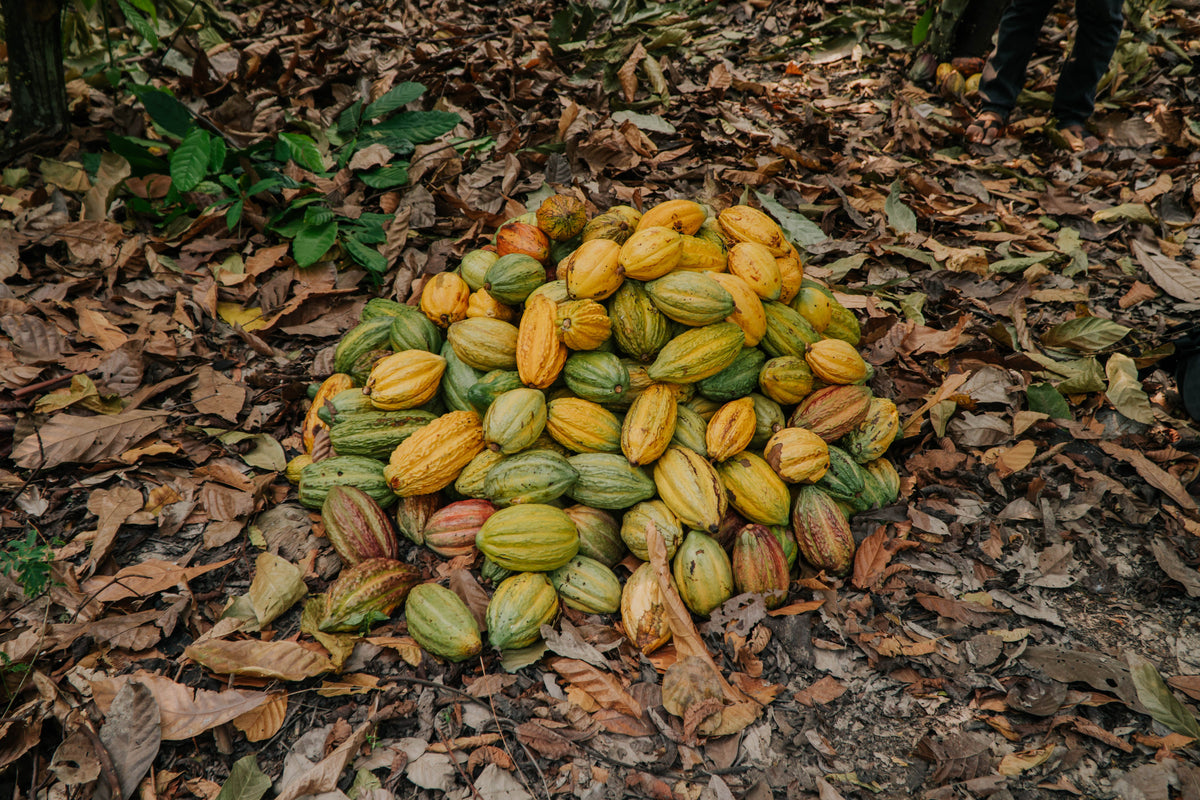
Many people talk about cacao as if it were simply a harvested bean that is dried and then processed. In reality, flavor development starts much earlier, during fermentation.
Fresh from the fruit, cacao does not taste the way we later know it. Only during fermentation do the precursors of aromas develop that can later appear floral, fruity, nutty, deep or rounded. At the same time, bitterness and astringent harshness are reduced.
And this is exactly where mass-market and specialty cacao separate most clearly.
Uncontrolled fermentation in the mass market
In conventional supply chains, fermentation is often inconsistent, improvised or purely functional. There may be a lack of clean infrastructure, time, know-how or simply economic incentive to work carefully. The result is uneven fermentation, sour defects, unclear aromatics and a product that is ultimately shaped less by origin than by industrial processing.
Controlled fermentation in specialty cacao
At Moruga and with our partners, fermentation is not a side step, but craft.
The beans are processed in dedicated fermentation boxes under clean, controlled conditions, with experience and care. They are turned regularly so fermentation proceeds as evenly as possible. Over years, such systems develop a microbiological continuity that can almost be compared to the work of brewers, winemakers or bakers: good processes are never coincidence. They are built on repeatable quality, accumulated know-how and a fine sense for when a process is tipping and when it has reached its full potential.
The result is not just arbitrarily fermented cacao, but a raw material with clarity, balance and significantly fewer off-notes.

Drying: often underestimated, but crucial for quality
After fermentation comes the next critical step: drying.
Here too, it is decided whether cacao remains clean, stable and aromatic, or loses quality.
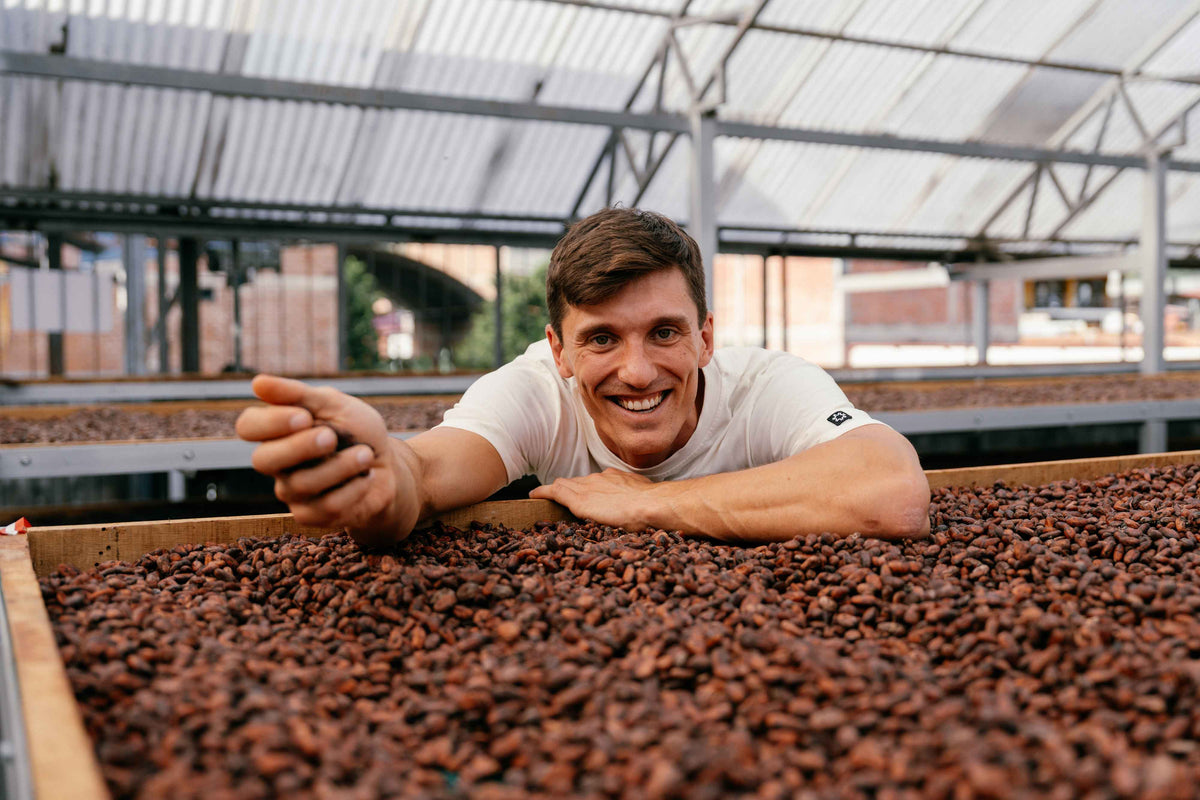
In specialty cacao, beans are dried slowly and carefully on drying beds or dedicated structures. They are turned regularly, ideally at short intervals, so the drying process remains even. Good drying takes time. Many lots benefit from slow drying over several days because it further stabilizes aromas and reduces excess acidity or sharp bitterness.
In the mass market, reality often looks different. In many places, cacao is dried under conditions focused mainly on speed and pragmatism. Unclean surfaces, poor air circulation, uneven sunlight or drying in problematic environments are not exceptions. In Ecuador, for example, cacao is often dried simply at the roadside. The result is defects, residual moisture, unstable quality and a raw material that can never reach the sensory level that may once have been present in the bean, not to mention contamination from heavy metals from tar and exhaust fumes.
Clean drying is not a minor detail. It is one of the prerequisites for cacao that later tastes clear, harmonious and high-quality.

What Moruga does differently
Moruga is not different because we talk about cacao more beautifully. We are different because we start in different places.
We work with rare, old and aromatically exciting cacao varieties, even though this is more complex and expensive.
We rely on partners who ferment cleanly, dry carefully and understand quality not as a marketing term, but as a daily practice.
We do not accept beans that might disappear in anonymous mass-market goods, but have no place in a high-quality product.
And we select again. Even after fermentation and drying, not everything is simply accepted because it somehow fits. Good beans and problematic beans are separated. A-grade remains A-grade. B-grade is not waved through just to create more volume at the end.
That sounds obvious. In the global cacao market, it is not.
What you taste later
All these differences are not theoretical. They do not end up in a PowerPoint or a sustainability report. They end up in the cup.
Cacao made from carefully selected, carefully fermented and slowly dried beans tastes rounder, clearer and often surprisingly complex. It needs no masking. No excess sugar. No milk powder. No aromas that cover flaws.
A high-quality 100% cacao is uncompromising in a way. It cannot hide. It shows how the work was done.
That is exactly what we love about good cacao. And that is why the bean itself matters so much to us.
A look at Amsterdam: commodity and specialty side by side
How radical the difference between mass-market and specialty really is can be seen not only in Peru or during fermentation on site. You can also see it later in Europe, where cacao arrives, is stored and redistributed.
About a year ago I was in Amsterdam, one of the most important hubs of the global cacao trade. There I was able to see with my own eyes how a large share of globally traded cacao is stored.
The experience was striking. Cacao was treated there as anonymous bulk goods, moved, stacked and stored like an industrial raw material without a face, with large excavators. Workers wore breathing masks because of the high mold load. After the visit, we were instructed to wash our clothes thoroughly and disinfect our shoes.
Next door, our cacao lay in a separate warehouse for specialty cacao: neatly stacked in sacks on pallets, clean, orderly, climate-controlled and under far more controlled conditions.
This exact difference runs through the entire chain.
Anonymous mass on one side.
Care, selection and respect for the product on the other.
And here too: what you see in storage, you often taste later.

Anonymous mass-market goods 👆

Our carefully selected beans 👆
Why this matters so much to us
Moruga does not want to be another company that simply tells a prettier story about cacao. We want to show that quality in cacao is real. Visible. Tasteable. And the result of many decisions.
The bean is not an interchangeable raw material. It is the beginning of everything. As one of my first cacao colleagues, Jesús from Mexico, once said to me: "Jonas, don't forget: we do not make the chocolate alone. We only finish the amazing work of the cacao farmers."
If you start with inferior goods, you may be able to mask that later. But you cannot truly correct it. If, on the other hand, you begin with exceptional raw cacao, ferment cleanly, dry carefully, select consistently and store respectfully, you create the foundation for cacao that delights without sugar and without additives. Or precisely because of that.
And along the way, we help preserve the varieties of one of the world's most fascinating foods and support the farmers who put quality before quantity. We create incentives for sustainable cacao cultivation in mixed forest systems instead of monocultures, because good cacao needs healthy soils to fully develop its aromatic potential. This is not easy. It is not the short path. But it is worth it. For us and for the farmers themselves, who can demand many times the world market price for quality cacao.
That is why we make Moruga. Not because it is easier. But because good cacao deserves exactly this level of consistency.
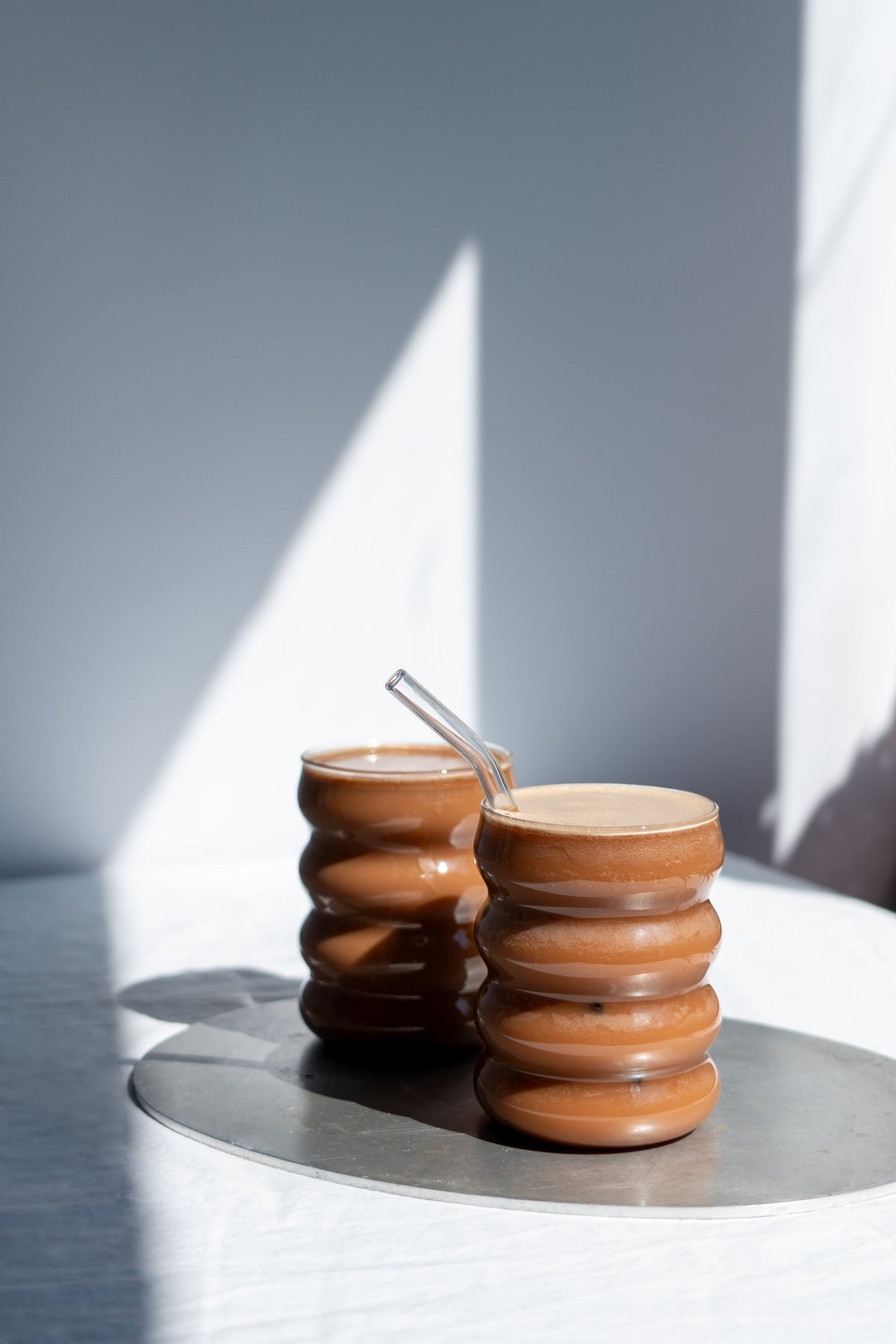
I drank while writing: Chuncho from Peru 🇵🇪

vielen dank für die transparenz, die qualität und die wunderbaren erklärungen und berichte, ich trinke den kakao nicht, sondern lasse mir die “pastillen” auf der zunge zergehen…
Auch für mich ist meine Tasse Kakao am Nachmittag das schönste Ritual. Ich habe drei Sorten von euch ausprobiert und kann nicht feststellen, welche mir am besten schmeckt, weil sie alle besonders sind. Nach diesem Beitrag trinke ich sie noch bewusster. Bin begeistert von eurer Arbeit und habe ganz viel Vertrauen in 1A Ware ohne Schimmel und Pestiziden macht weiter so, dann bleibe ich eine treue Kundin
Vielen Dank⭐️⭐️⭐️⭐️⭐️
Wow! Vielen Dank für diesen Einblick. Einiges davon hat man ja geahnt. Aber das der Unterschied zwischen Kakao und Kakao sich so eklatant durch die gesamte Kette zieht, war mir neu. Jetzt trinke ich meinen Kakao noch bewusster.
DANKE für den Bericht. Ich bin seit einiger Zeit eine ausgesprochene Morugacacao – Geniesserin. Durch Corona bin ich seit 3/4 Jahr krank und musste meine Ernährung stark anpassen. Eines ist geblieben: mein Nachmittagsritual mit einer großen Tasse Kakao mit Haferschaum, oder Kokosschaum oder Eiweissvanilleschaum. Dazu geröstete Keshewnüsse. Darauf freue ich mich den ganzen Tag-egal, wie erschöpft ich bin -dieses Ritual ist ein wertvolles Geschenk für mich. Ich habe großen Respekt vor eurer Konzeption, dem ganzheitlichen Umgang und die Begeisterung, die beim Lesen zu spüren ist. Dafür bin ich sehr gerne bereit, etwas mehr Geld auszugeben, spare ich dadurch an Schokolade und sogar am Rotwein an Abend, weil ich eine zufriedene Sattheit spüre und das ist gut.
Bitte haltet weiter an euer Ursprungsanliegen fest, das ist ein wertvoller Beitrag, die Welt ein wenig zu verändern und wir dürfen es genießen – deshalb noch einmal ein dickes DANKESCHÖN 💝
Sie machen das wirklich hervorragend! Diese ganze Berichterstattung hat mir sehr gut gefallen! Ich habe zwar erst einmal eine größere Sendung Kakao bei Ihnen bestellt, aber der schmeckt mir wirklich fantastisch! Sobald meine Reserven erschöpft sind, werde ich sofort neuen Kakao bei Ihnen bestellen! Vielen Dank für so viel Transparenz und Informationen! Grüße aus Köln von Volker Rasch
Leave a comment