




Many ceremonial cacao products are imported directly from their countries of origin to Germany without being processed further. In the beginning, we did that too. We imported about 200 kg of raw cacao from a small factory in Trinidad directly to Berlin. Of course, that was exciting. A little like a mix between Scarface and Willy Wonka.
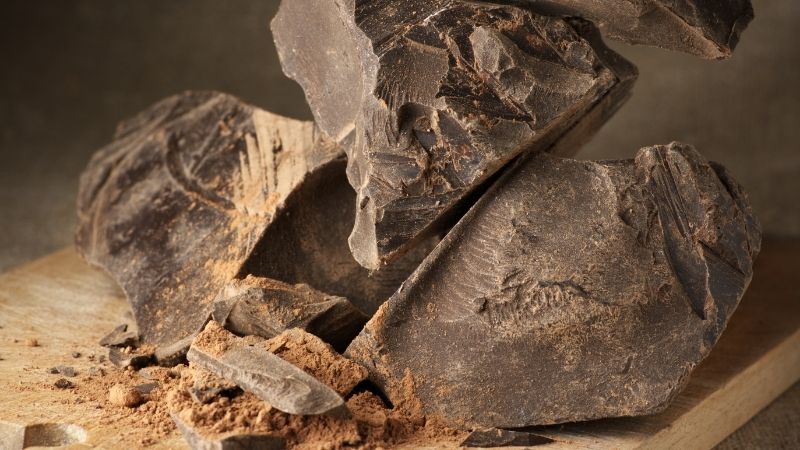
But we had too many problems to solve. Inconsistent quality meant that the blocks tasted different every time. The cacao was also ground very coarsely, which led customers to complain about sediment at the bottom of the cup, a bit like coffee grounds. For many people, it scratched their throat and made them cough.
The blocks were unwieldy and hard to store.
They were also difficult to handle, especially for yoga teachers who wanted to host cacao ceremonies in small groups. Every time, they had to shave cacao off the block with a knife, which also made dosing difficult. Sometimes even we managed to oversalt the cacao during a ceremony. Nobody hosting a cacao ceremony wants that. Salt matters when you prepare cacao with water because it reduces bitterness and rounds out the flavor. But too much salt is definitely too much.
A cacao block was also hard to store once it had been opened and not fully used. The aroma fades, just like it does with coffee beans stored in the open. All in all, we realized that we needed something better for our ceremonies: cacao made with consistent quality, freshly roasted, vacuum-packed and packed in resealable packaging.
We started having our ceremonial cacao freshly roasted and produced in Berlin. Update: production has since moved to Switzerland.
That is why we began working directly with chocolate makers in Berlin who could produce ceremonial cacao according to our specifications. For example, the bars already contained the right amount of salt, so all you had to do was mix the cacao with the right amount of water. After countless tests, we arrived at the right recipe and bar size, so that one square could simply be prepared with 100 ml of hot water. No more oversalting.
Our ceremonial cacao was freshly roasted in Berlin and vacuum-packed, creating an incredible flavor experience. We were able to work with cacao beans from different countries and offer a range of powerful cacao varieties for ceremonies, for example from Trinidad, Guatemala, Ecuador and Belize. In theory, we can work with any cacao bean that is grown fairly, wild or in an agroforestry system.
Our bars were easy to dose, resealable and beautifully designed. Update: today we also offer cacao in Drops format.

Our bars were the same product as the cacao ceremony blocks you can buy elsewhere, only more finely ground, freshly roasted in Berlin, refined with salt, practically poured into bars and vacuum-packed in beautifully designed resealable packaging. They were already being used by many yoga teachers and healers in Berlin, Germany and Europe for cacao ceremonies. Because they looked beautiful and, at 200 g, were neither too large nor too expensive, our ceremonial cacao bars were also well suited for resale to ceremony participants.
Our supply chain is now rock solid and we can deliver many kilos within a few days. Update: by now, we are talking tons.
We no longer have to fear delivery bottlenecks, unpleasant surprises, mold or inferior quality. We are really glad we took the step toward becoming a chocolate maker, because it allows us to keep exploring the universe of cacao in all its facets and share that diversity with our partners. After all, the people attending a cacao ceremony also expect a real culinary experience.
Update: This blog post was written in 2020. Today we produce our popular cacao Drops in Switzerland. But of course, we have stayed true to our product values.

Hallo zusammen
Wieviele Drops sollte man für eine 240ml Tasse verwenden?
Grüße
Peter
Leave a comment