Pure cacao sounds simple, but it is worth checking carefully. Many products are called cacao even though they are mixed with sugar, milk powder, flavors or fillers. Others taste like cacao, but are built more like sweet drinking chocolate than pure 100% cacao.
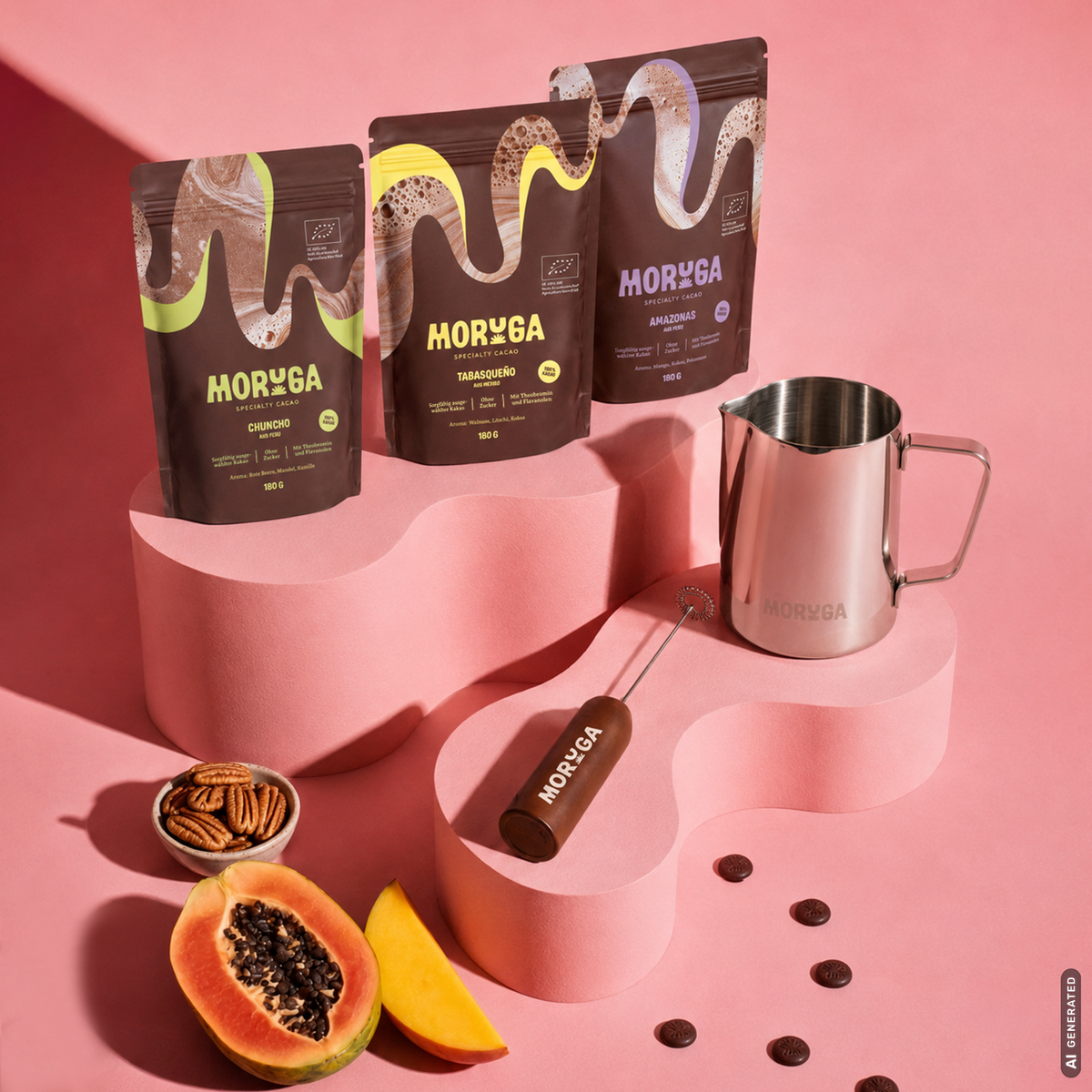
When we say pure cacao at Moruga, we mean 100% cacao: no added sugar, no added flavors and no unnecessary fillers. That is the basis if you want to drink cacao consciously, use it in a morning routine or prepare it for a cacao ceremony.
If you want the broader buying guide, start with Buy cacao: how to choose 100% cacao. Current products, bundles and the Starter Kit are collected on the cacao varieties page.
What does pure cacao mean?
Pure cacao consists of cacao. Depending on the product, that can mean cacao mass, cacao paste or a block made from ground cacao beans. The natural cacao butter remains part of the product, which gives the drink more body and creaminess than many heavily defatted powders.
The ingredient list matters. If you see sugar, sweeteners, milk powder, lecithin, flavoring or a long list of additives, it is no longer pure 100% cacao.
Pure cacao is not automatically good cacao
100% cacao is the foundation, but it is not the whole quality story. Origin, fermentation, drying, roasting, processing and transparency still matter.
A well made cacao should not only taste bitter. It can be nutty, fruity, mild, earthy or chocolatey. That is why we recommend buying by the full picture: ingredients, flavor, lab values, availability and how you actually want to drink it.
If the term raw cacao is important to you, read Buy raw cacao. If your focus is ritual, read Buy ceremonial cacao.
Without sugar does not mean without flavor
Many people expect unsweetened cacao to be harsh. It can be, but it does not have to be. Preparation makes a big difference: hot water or plant milk, enough blending and a dosage that fits your taste.
If you are new, a simple routine helps more than complicated rules. Compare products on Buy Cacao or start with the Moruga Starter Kit if you want to taste several origins first.
Who is pure cacao for?
- People who want less sweet drinking chocolate: you decide whether and how to sweeten.
- Coffee routines: cacao contains theobromine and less caffeine than coffee. Read Cacao instead of coffee.
- Cacao ceremonies: 100% cacao can be dosed and prepared consciously.
- Cooking and recipes: you control intensity and sweetness yourself.
Why lab values matter
With cacao, natural topics such as cadmium and lead can be relevant. That does not mean cacao is automatically problematic. It means transparency is a real quality signal.
We collect our information on the Moruga lab tests page. For context, read Heavy metals in cacao: cadmium, lead and lab values.
Best entry point
If you already know which origin you like, use the cacao varieties page. If you are not sure yet, the Starter Kit is usually the better first choice because you can compare several cacao profiles instead of guessing from descriptions.
Quick checklist before buying
- Does the ingredient list really say only cacao?
- Is the origin or variety clear?
- Are there quality and lab value details?
- Does the cacao fit your use case: mild, intense, ritual-focused or coffee alternative?
- Is the product available, or would a set be more useful?
Pure cacao without sugar is not a complicated product. But if you buy it well, it gives you more flavor and more control over what goes into your cup.