



Short answer first: cacao is not automatically caffeine-free. But cacao feels different from coffee for many people. When someone asks whether cacao is caffeine-free, they usually mean a more practical question: will this make me nervous, wired or awake like an espresso?
In 100% cacao, caffeine is not the main compound people talk about. The more characteristic cacao compound is theobromine. That is one reason why many people describe cacao as rounder and less sharp than coffee. It is not a guarantee for every body, but it explains why cacao is often discovered as a calmer coffee alternative.
For the broader comparison, read cacao instead of coffee and reduce coffee with cacao.
How much caffeine is in cacao?
Cacao naturally contains caffeine, but the amount depends on variety, processing and serving size. Strictly speaking, cacao is not caffeine-free. At the same time, many people drink cacao differently from coffee: more slowly, more creamy and with less expectation of a fast kick.
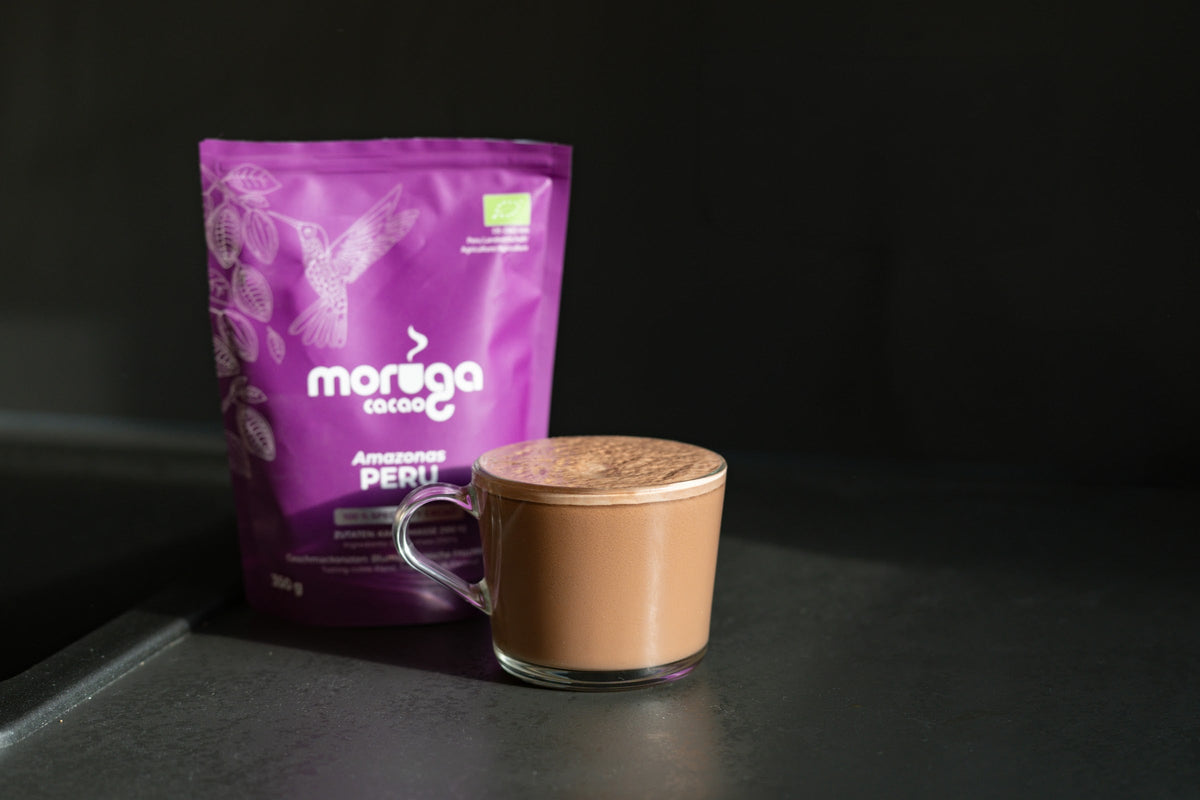
Moruga Cacao is a natural product, not a decaffeinated product. If you are sensitive to stimulating compounds, start with a smaller serving and notice your response.
Theobromine: why cacao is perceived differently
Theobromine occurs naturally in cacao. Many people describe the feeling as warm, calm alertness rather than a quick coffee peak. That experience is subjective, but it is one reason why 100% cacao fits into morning routines, focus rituals or slower afternoon breaks.
If focus is your main reason for coffee, read cacao for focus at work. For preparation, use how to prepare creamy 100% cacao.
Is Moruga Cacao caffeine-free?
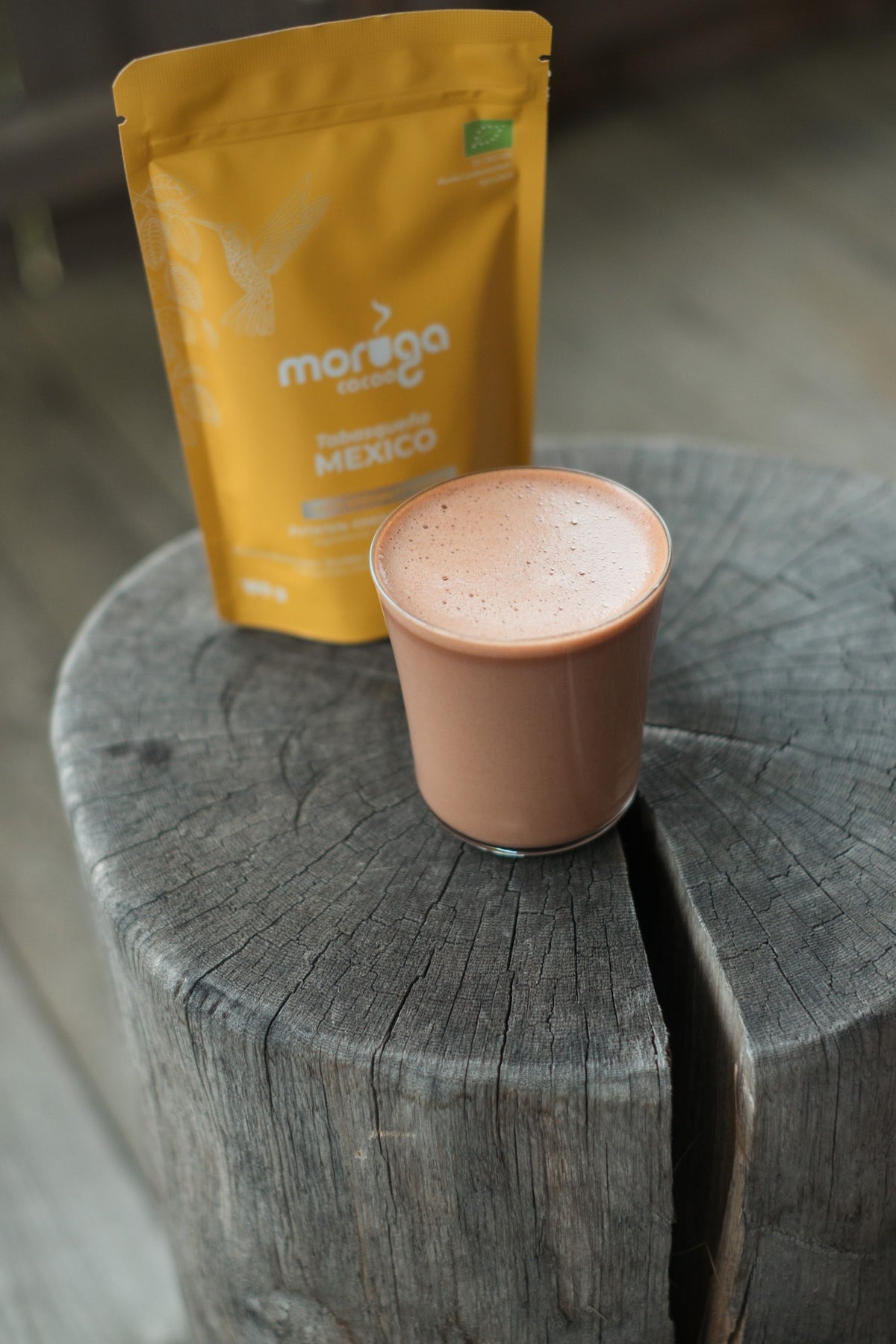
No. We would not describe Moruga Cacao as caffeine-free. Moruga is 100% cacao: not defatted cocoa powder, not sweet drinking chocolate, not a decaffeinated product and not an instant mix.
If you want to understand pure cacao, read pure cacao without sugar. For buying criteria, use how to buy 100% cacao.
What to check when buying cacao as a coffee alternative
Start with the ingredient list. Ideally, it says only cacao. Sugar, flavoring and milk powder change not only taste, but also how the drink fits your routine.
Then choose a variety that you actually enjoy. Some cacaos are fruity and bright, others are nutty, intense or creamy. The Moruga Starter Kit is useful because you can compare several profiles before buying a larger amount.
You can find current varieties, bundles and availability on the Moruga cacao varieties page.
When to be careful
This article is not medical advice. If you are pregnant or breastfeeding, take medication, have cardiovascular concerns or react strongly to stimulants, check regular cacao consumption with a qualified professional.
Even without a specific medical concern, start with a smaller serving, drink water and observe how your body responds. For ritual contexts, also read possible cacao ceremony side effects.
Quality and transparency
If you drink cacao regularly, transparency matters. Cacao is a natural food, so origin, processing and lab values are part of quality. You can find our current quality information on Moruga lab tests.
Conclusion
Cacao is not caffeine-free in the strict sense, but it is also not simply coffee with a different flavor. If you want to reduce coffee, 100% cacao can be a useful alternative: less sharp, more ritualized and more shaped by taste, texture and preparation.