




How do you prepare our cacao?
In this article, I write about my experience preparing cacao the way it is enjoyed in the countries where the cacao plant originates. I am glad I can share more than theory here. In winter 2018 I rented a small ice cream cafe in Prenzlauer Berg, Berlin. For four months, I was able to test many different cacao varieties and preparation methods with real customers. These are the results of more than five years of experimenting.
Preparation Methods

Preparation in a blender
If you already have a good smoothie blender at home or in the office, I recommend this method. Together with a splash of oat milk, it creates so much foam that you can almost eat your cacao with a spoon. My recommendation is Oatly Barista Edition. This is how I now drink my cacao every morning.
BUT BE CAREFUL:
Most smoothie blender manufacturers advise against blending hot liquids. The blender material can be damaged, especially with glass containers, and so much pressure can build up inside the blender that it can burst open.
So ALWAYS keep this in mind ⚠️
- Never blend boiling-hot liquids.
- I personally use a mix of 1/3 cold oat milk from the fridge and 2/3 boiling water, which lands at about 60-70°C when mixed.
- Gently shake the blender first so the air inside warms evenly and can escape.
- Start blending on the lowest setting, then increase the speed.
Here is a very old video in English where I demonstrate it.
Small plus: in a blender, you can blend dates or bananas together with the cacao.
Which blender do I use?
In addition to my high-performance Omniblend blender from the video above, I now also have a smaller Nutribullet blender that I use for my morning cacao. The advantage: it can be screwed shut, so no pressure can escape, and it is very easy to clean.

Preparation with an electric handheld milk frother
With a handheld milk frother, you can prepare your cacao conveniently on the go or quietly at the office. I have one in my camper van, for example.
A barista milk pitcher works well for this. Here too, I mix 1/3 cold Oatly Barista Edition with 2/3 boiling water and, if needed, a few spices.

Preparation in an electric automatic countertop milk frother
I have tried many electric milk frothers, and so far I have been dissatisfied with every single one. The problem here is that the cacao is heated too strongly in isolated spots at the bottom of the frother, which gives it a burnt aftertaste. If you already have this kind of milk frother at home, you can work around the issue by adding 70°C hot water from the kettle together with the cacao and using only the “cold stir” function. That way, the cacao cannot be burned by the frother, but the motor still stirs it until creamy.

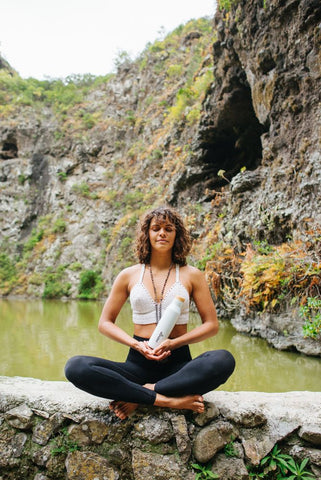
Preparation with a thermos bottle or our cacao shaker
Who would have thought it: cacao is best shaken, not stirred.
By far the easiest method for preparing cacao came to me during ice bathing, or rather afterwards. Because of my social project Icedippers, I went ice bathing every Saturday during the cold Berlin winter and, of course, often brought cacao in a thermos to warm up afterwards.
One Saturday I was running late and simply threw hot water and cacao into the thermos, jumped on my bike and thought I would somehow stir it creamy with a spoon when I arrived. Oh wonderful surprise. When I got there, I did not need to stir it at all. The back-and-forth shaking in my backpack had already fully dissolved the cacao in the hot water and made it beautifully creamy.
After that, I started testing different thermos bottles for this method. The problem with most thermos bottles is that they cannot withstand the pressure that builds up inside when you shake a hot liquid. The cacao leaks or sprays around. Thermos bottles with push-button lids are completely unsuitable for this.
Why does pressure form in the first place? You pour a hot liquid into the bottle, above which there is relatively cold air. When you close the bottle, you trap that air. When shaking, the hot liquid warms the air strongly, and warm air expands. It cannot escape, so pressure builds up inside the bottle.
I found a bottle whose lid sits down inside the neck in such a way that you do not burn your fingers when opening it and the cacao does not spray through the kitchen.
We print the thermos bottle with our logo and sell it here as a cacao shaker.
Another advantage: cacao stays warm in the cacao shaker for more than 12 hours.
Preparation in a Thermomix
In my cafe in Berlin I had access to a Thermomix, and those things are really expensive. It produced the creamiest cacao I had made up to that point. Why was the Thermomix method so special?
In the Thermomix, I could slowly heat cold water and cacao to 60°C while stirring gently until it had completely dissolved, then whip it foamy for three seconds at full speed. The Thermomix is the only device I know that can both stir slowly, gradually increase temperature and then instantly move to very high speed for foam.
I hope that one day I can design a device with the same function that is specifically made for preparing cacao and does not cost more than €1,000.
Preparation with a whisk
Together with shaking in a shaker, this is the most minimalist method. You need a jug or coffee pot and a whisk with a round handle that you can roll between both hands. Angular handles do not work. In the beginning I sold this whisk, but because our shaker is a better tool, I stopped selling it.
Pour water at around 70°C into the jug and add as much cacao as you like. At first, use one hand to move the whisk back and forth in the hot water and stir gently until the cacao has dissolved. Then place the whisk fully into the water and roll the handle back and forth between both hands, as if you were trying to make fire. The whisk rotates very quickly in the water and lets you whip the cacao into a beautiful foam.
Preparation with the steam wand of an espresso machine
This method is irrelevant for many people, but cafe owners and coffee nerds with a portafilter machine at home keep asking me about it. I strongly advise against using the steam wand. It heats the cacao far too intensely in isolated spots, resulting in a burnt, bitter taste.
I know that most cafes prepare their hot chocolate with the steam wand of an espresso machine by default. But if we rethink cacao, we also need to rethink preparation. Nobody would make a flat white by mixing espresso and milk first and then steaming both together with the steam wand. So keep away from the steam wand.
Temperature
There are strange descriptions and almost mystical explanations circulating online about the right preparation temperature for cacao. I can confidently say that claims that cacao should not be heated above 42°C in order to “work” are complete nonsense. The South American cultural and culinary traditions that so many mystical self-proclaimed cacao shamans borrow from include roasting cacao beans. “Raw cacao” was never part of those cultures, just as drinking raw coffee was never part of Ethiopian coffee culture.
In the experiments at my cacao cafe, I found that three factors influence the drinking experience of ceremonial cacao:
The hotter, the more bitter
First, the drink seems to become more bitter as the preparation temperature rises. I found that temperatures above 70-80°C change the flavor and make the cacao taste more bitter. I have not yet come across studies on this, but my explanation is based on coffee and tea, both of which release more bitter compounds and tannins into the surrounding water at higher brewing temperatures.
The colder, the creamier
Second, cacao becomes creamier as the drinking temperature drops. I found that cacao that has stood for a while can create a very pleasant mouthfeel even at an unusually low drinking temperature. I explain this through cacao butter becoming firmer as the temperature drops; from around 37°C it crystallizes from liquid oil into a solid fat. I often noticed a particularly pleasant drinking experience at around 45°C. Admittedly, this is far below the usual drinking temperature for hot drinks, which we tend to sip at around 60°C.
The colder, the more aromatic
And finally, this is very subjective, but I notice more of the very fine aromas in cacao at a lower drinking temperature. This phenomenon is well known in the tea world. Some teas are brewed at only around 60°C and even drunk at just 30°C for exactly this reason.
A word on water quality
Tea and coffee drinkers know the value of the water they use to brew their favorite drinks. In both worlds, standards have developed around water mineralization. The same is true for cacao. Your cacao drink is more than 95% water, so make sure it is good water. I lived in Berlin for a long time, where the tap water quality was underground, pun intended, for drinking enjoyment.
Back then, I used natural mineral water from the supermarket for my hot drinks. If you are interested in water quality, it is best to read through the many blogs, magazines and interviews from the coffee world, for example this one by Coffee Circle. Various filter systems can turn tap water into a high-quality drinking experience, and good cafes invest tens of thousands of euros in such systems. The world of water filters can be confusing, however, and unfortunately I cannot make a recommendation because at this point I am connected to a fresh spring-water system in the Palatinate Forest and am very happy with it.

Does the Cacao Cafe still exist?
Unfortunately, no. For me, the cafe was a laboratory from the beginning. I knew the concept was too niche to run profitably. I wanted to test recipes there and collect customer feedback directly. Maybe one day there will be another Moruga cafe, or Cacaó, once cacao has become a little more widespread. But not for now.
PS: With the cafe I even made it into Exberliner Magazine.
The cafe is still on Google Maps.

Enjoy,
Jonas
What I drank while writing this: nothing, because I was fasting 😇

Moin zusammen.
@Fabian: ich befolge die Empfehlung von 5-10 Drops auf 250 ml Flüssigkeit. Je nach Tassengröße könnten es auch nur 200 ml sein.
Anfangs habe ich den Kakao mit Wasser oder Hafermilch zubereitet, jedoch hat mich der Geschmack nie wirklich überzeugt, so dass ich derzeit noch bei der Vollmilch hängen geblieben bin. Vermutlich braucht es bei mir einen gewissen Fettgehalt im Getränk, um zu munden.
Mit einem Milchaufschäumer von Severin habe ich hier ganz gute Erfahrungen gemacht. Das magnetisch angetriebene Rad wird nach einem kurzen Anlauf deutlich stärker angetrieben. Mein perfekter Moment um die Drops hinzuzugeben.
Am Ende des Prozesses hatte die Milch laut Bratenthermometer tatsächlich 70 Grad Celsius.
Ich habe den SM 9684 von Severin genutzt.
Da ist auch just die nächste Tasse Kakao fertig geworden. Lasst euch euren Kakao schmecken! :)
LG
Finn
Ich bereite meinen Kakao Peru mit dem Wasser der Kaffeemaschine zu – nehme 12-15 Drops und einem Schluck Milch auf meine ca 500 ml „Tasse“ zu und mit dem Schäumer von Meruga 💞🇦🇹
Vielleicht ergänzen Sie die Zubereitungshinweise noch um eine Empfehlung, wie viele Kakao drops pro 100 ml Getränk verwendet werden sollen. Vielen Dank.
Vielleicht ergänzen Sie die Zubereitungshinweise noch um einen Hinweis oder Empfehlung, wie viel Kakao man benutzen sollte, also wie viel Kakao pro 100 ml Getränk. Vielen Dank.
Thank you for clear and precise information about temperatures amongst other things:) Best wishes Leila
Leave a comment