



Mexican Cacao: A Conversation with Jan Schubert from Original Beans
Jan Schubert, Conservation Cacao Leader at Original Beans, shares his insights into Mexican cacao and sustainable cultivation methods.
1. You are the cacao expert at Original Beans. What fascinated you most about this Mexican cacao?
What fascinates me most is the culinary history. Even though cacao comes from South America and has been cultivated and used there for longer than in Central America, it is Central America, and especially Mexico, where a broad cacao culture emerged that goes far beyond drinking chocolate: the use of cacao in mole sauces and many savory dishes, the combination with spices and countless varieties of chili peppers. This exact diversity is also reflected in the cacao gardens of the Zoque, where cacao is grown in mixed cultivation together with these very spices, and has been for thousands of years.
2. If you had to describe this Mexican cacao in three words, which would you choose?
Harmonious, balanced, tropical.

3. What was your aha moment when discovering this special cacao in Mexico?
Experiencing the effect of a living cacao culture, the farmers' pride in their cacao and the resulting unique appreciation for quality was especially eye-opening for me.
4. How has cacao cultivation in Mexico changed in recent years?
Production has been declining since the early 1990s and has worsened since 2005 with the emergence of moniliasis, a fungus that affects cacao plants. The last two years have been very bad years for cacao cultivation because of extreme heat and drought.

5. What can we learn from Mexican cacao farmers about sustainability?
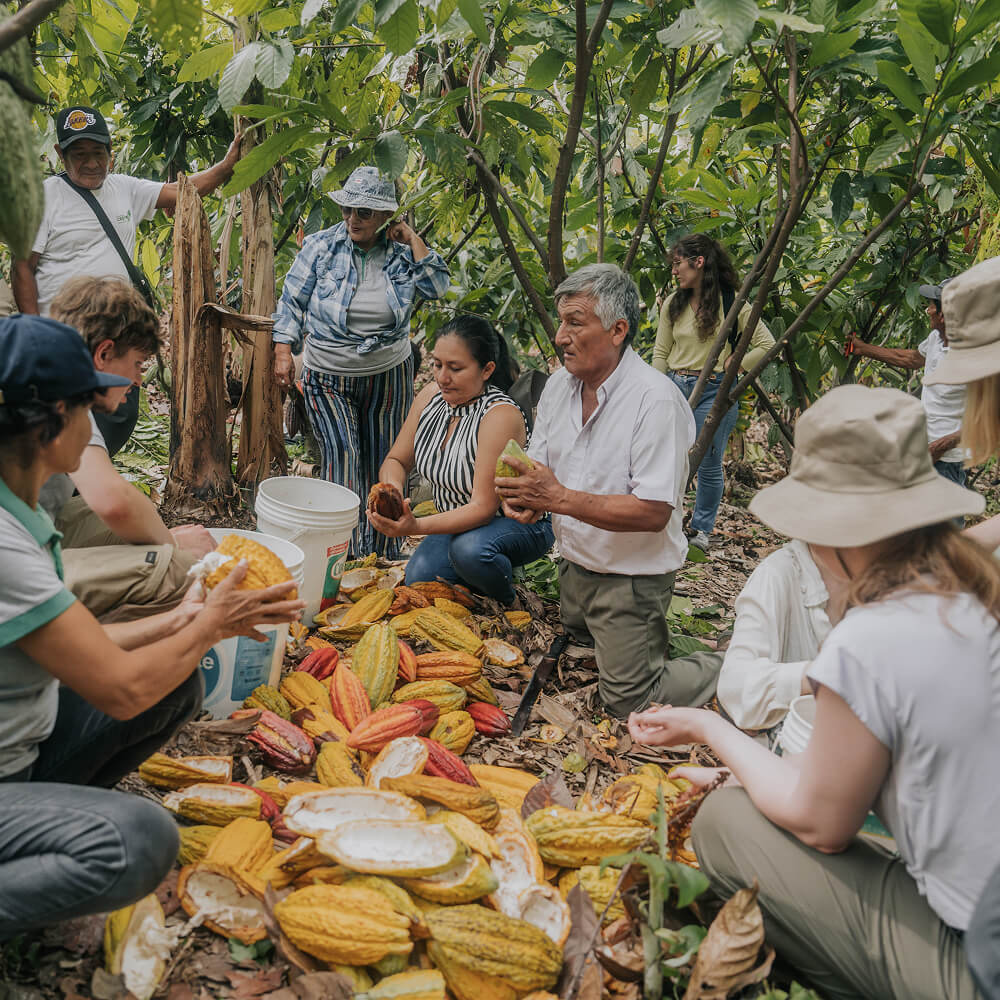
Traditional cultivation in cacao gardens rather than monocultures, as they are common in West Africa, is deeply rooted in Mexico. These gardens are a model example of what are called food forests. They are cultivation areas where, alongside one or more crops intended for sale, farmers also grow plants that secure their own food sovereignty. This is especially important for smallholder farmers and indigenous communities with limited farmland, because it helps avoid dependency.
In Mexican cacao gardens, almost all spices can be grown locally, such as ginger, turmeric, cardamom, pepper, cinnamon, cloves, vanilla and lemongrass, as well as fruits such as bananas, mangoes, pineapples, papayas, lemons and grapefruit, and important staple foods like corn, plantains and beans.
Cacao has been grown in Mexico for thousands of years. Throughout history, there have repeatedly been very poor cacao years. The fact that these farming communities still exist, despite the low prices they experienced up until this year, speaks for the resilience and pride of Mexican cacao farmers.

6. How does terroir influence the taste of Mexican cacao?
On the one hand, Mexico's ancient cacao culture preserved old Criollo cacaos, which after the arrival of the Spanish crossbred naturally with different cacao varieties brought from other South American countries. Especially in the region of today's Tabasco, this cacao often comes from Ecuador, namely old Amelonado and Nacional cacao. The resulting cross is now known as Tabasqueño, an ancient landrace that combines the mild notes of old Criollo with the typical chocolatey character of Ecuadorian Nacional.
On the other hand, the regular dry periods in the region cause fruit notes in the cacao to stand out more strongly, because more sugar can accumulate in the pulp.
In addition, cultivation in diverse agroforestry systems makes the flavor profile of the cacao even more layered, because the cacao can absorb many more aromas through the soil.

7. How does this specific cacao contribute to biodiversity in the growing region?
Organic cultivation, without any pesticides, protects the enormous biodiversity of insects. Insects are not only important for pollination, but also serve as food and a foundation of life for many other animals, such as birds, amphibians and mammals.
Cultivation in traditional cacao forests, meaning diverse agroforestry systems, also creates habitats for many animals, especially birds and bats.
In addition, the purchase of cacao economically supports the Zoque community and therefore indirectly supports the protection of their forest, which they preserve as a nature reserve.
8. How does climate change specifically affect the cultivation of this Mexican cacao, and how do you respond to it?
The last two years were very hot and dry, and the productivity of cacao and other crops that depend on a humid climate, such as vanilla and pepper, has declined sharply. The shade created by the different tree species in agroforestry systems softens these effects, so the production decline there is significantly lower than in monocultures.
9. What concrete measures do you take to make cacao cultivation in Mexico more environmentally friendly?
We promote the biodiversity of cacao gardens through cultivation in diverse agroforestry systems. The timber trees in these systems absorb large amounts of CO2 and store it long term. No pesticides, herbicides, fungicides or chemical fertilizers are used in the cacao gardens. We guarantee this through external organic certification.

10. How does your commitment to regenerative cultivation and fairness contribute to social sustainability in the growing regions?
All Original Beans projects support smallholder farmers and indigenous communities, because we buy cacao from them at prices above the world market. Together with our partner, we also support the farmers in obtaining organic certification, gaining access to seedlings and participating in training to learn more about organic agriculture and increase their production sustainably. For example, by producing organic fertilizers or learning how to prune trees properly, productivity and therefore income can be increased by 50%.
In our nurseries, we grow slowly growing timber trees in addition to cacao. These are distributed to the farmers, so to speak as a kind of pension fund, because they take decades to grow but can later achieve a high value.
During the years of low world market prices, meaning over the past decades, we bought cacao at high and above all stable prices that farmers could plan with. In the current situation of exploding world market prices, with a price increase of 400% from July 2023 to July 2024, we pay additional premiums for quality and organic cultivation.
11. What message would you like to share with every cacao lover?
Sustainable cacao cultivation is possible. Even though cacao repeatedly comes under criticism, for example because of child labor and slavery in West Africa, deforestation of rainforests and so on, cacao can also achieve exactly the opposite: a living income for smallholder farmers, reforestation and a positive climate balance. One thing should not be forgotten: cacao is a tree, and old varieties grown organically can live for hundreds of years and store enormous amounts of CO2. Together with the timber and fruit trees in agroforestry systems, truly good cacao can even be highly climate-positive.

12. How does Original Beans ensure bean quality?
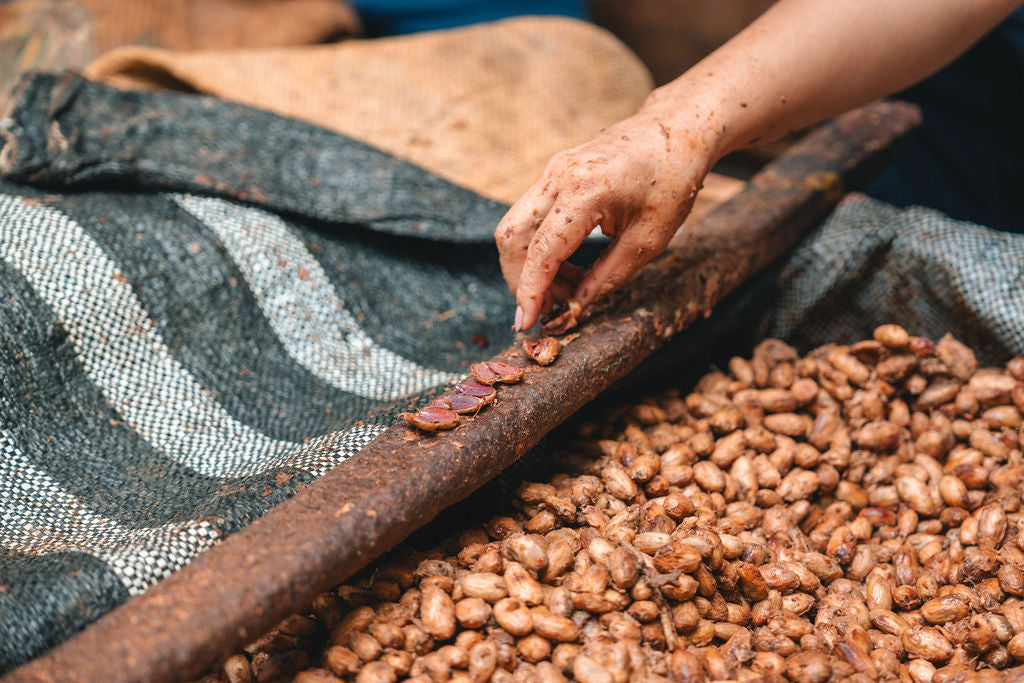
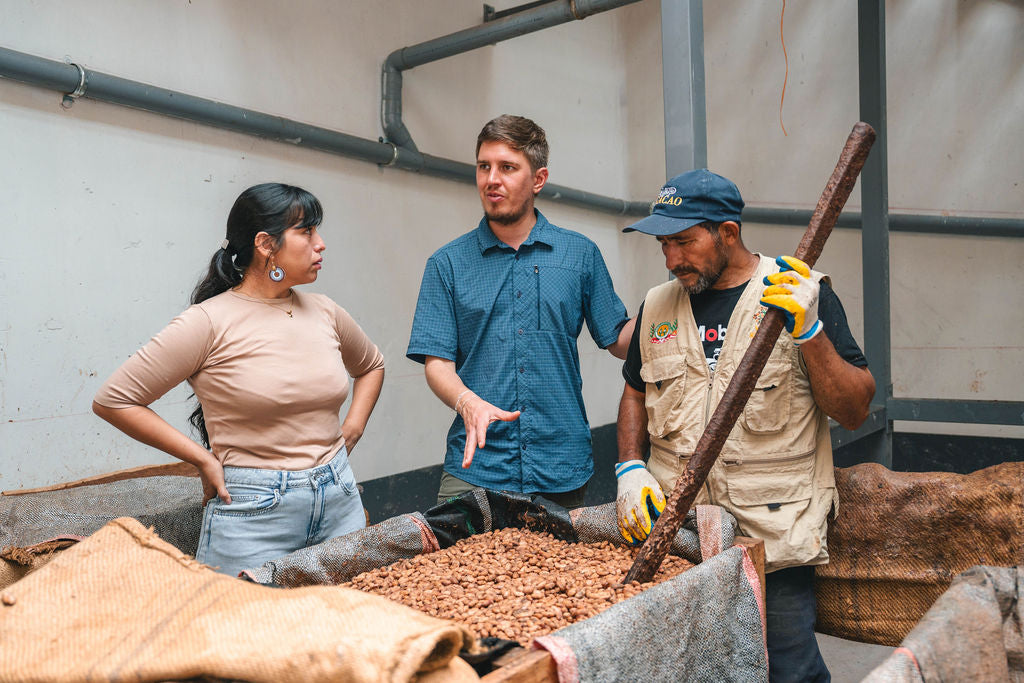
To ensure quality, the cacao is purchased centrally and then processed, meaning fermented and dried. Only this way can a consistent and reliably stable quality be guaranteed.
Our partner has developed a fermentation and drying protocol specifically adapted to this cacao, in order to reduce bitterness as much as possible without destroying the fine fruit notes.
Before the cacao is shipped, samples from every single batch are tested not only for taste by a trained tasting panel, but also for pesticide residues and cadmium. After arrival at the warehouse in Amsterdam, all of these analyses are repeated again.
13. What does your everyday work at Original Beans look like?
The beautiful thing is that there is no everyday routine. I spend half of my time in our projects, visiting our farmers and reforestation projects, meeting partners and coordinating our local team. The other half I work from my home office on organic certification, project plans, cacao export and import, as well as quality assurance. And when there is still time left, I turn to my favorite topic: preserving old cacao varieties and working with the Bioversity International team on decoding and grouping the DNA of old cacao varieties.