



If you want to understand why cacao can taste so different, do not start with finished chocolate. The decisive differences happen much earlier: on the farm, after harvest, during fermentation, drying, selection and storage.
That is where anonymous commodity cacao and specialty cacao begin to separate. It is also where quality starts for Moruga. If you want to see what is currently available, compare Moruga cacao varieties. For an easy first step, use the Starter Kit.
Two buckets: good beans and problematic beans
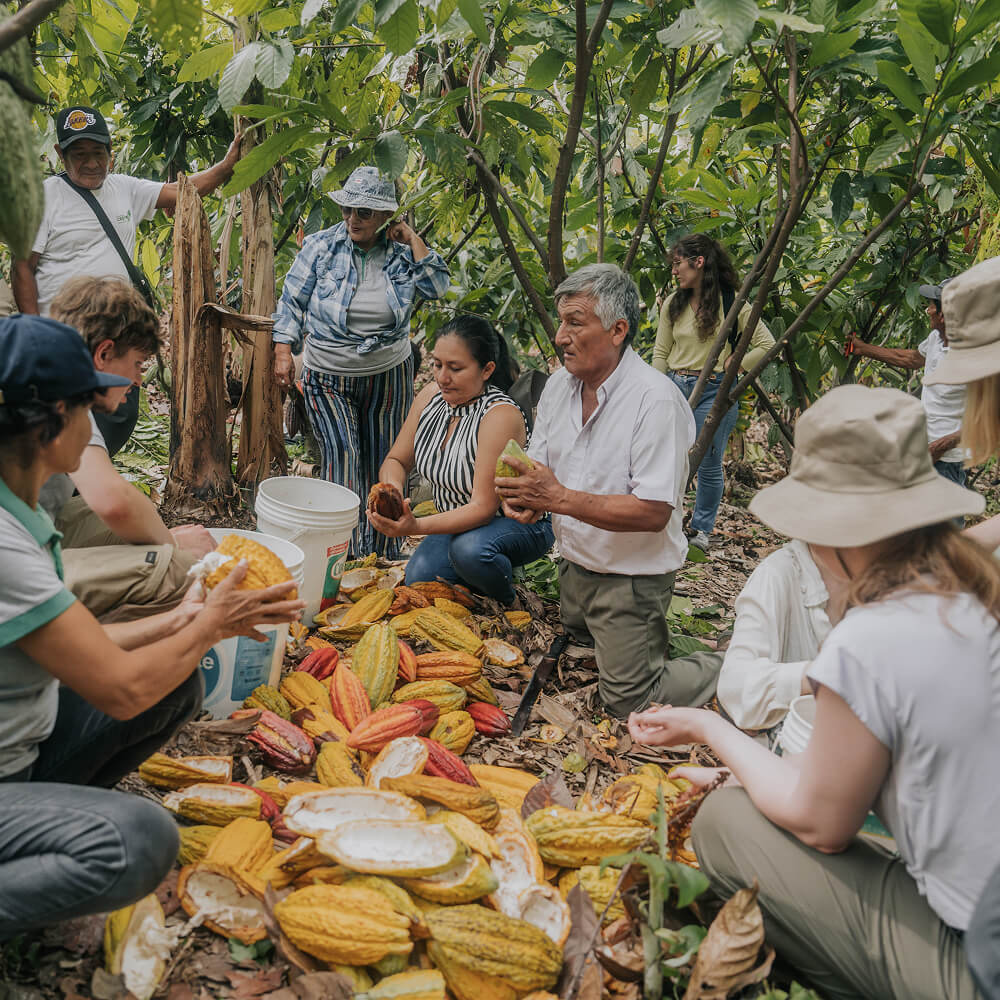
On many farms, there is a simple image: one bucket holds clean, intact beans. Another holds damaged, unripe, moldy or otherwise defective beans.
In specialty cacao, it should be clear which beans continue into a high-quality product. In anonymous mass flows, the line is often less strict. When cacao is later heavily sweetened, flavored or industrially processed, flaws are easier to cover. With 100% cacao, they are not.

Varieties: yield is not the same as aroma
In the global mass market, hybrids often dominate because they are bred for yield, robustness and scale. That can make economic sense, but aroma complexity and origin character often move into the background.
Moruga is interested in aromatic, older and rarer cacao varieties. They are more demanding, often more expensive and not always available. But they can bring more depth, more terroir and a more interesting story.
Fermentation: the step you taste later
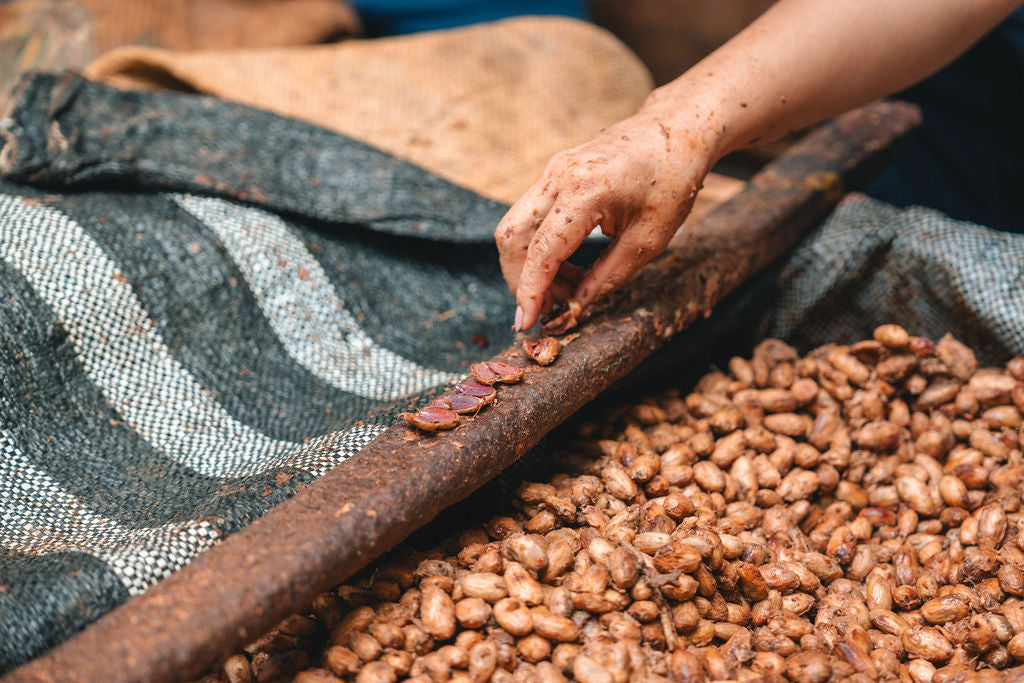
Fresh cacao does not taste the way you later experience it in the cup. During fermentation, many aroma precursors develop and harsh bitterness can be reduced. In specialty cacao, fermentation is not a side step. It is craft.
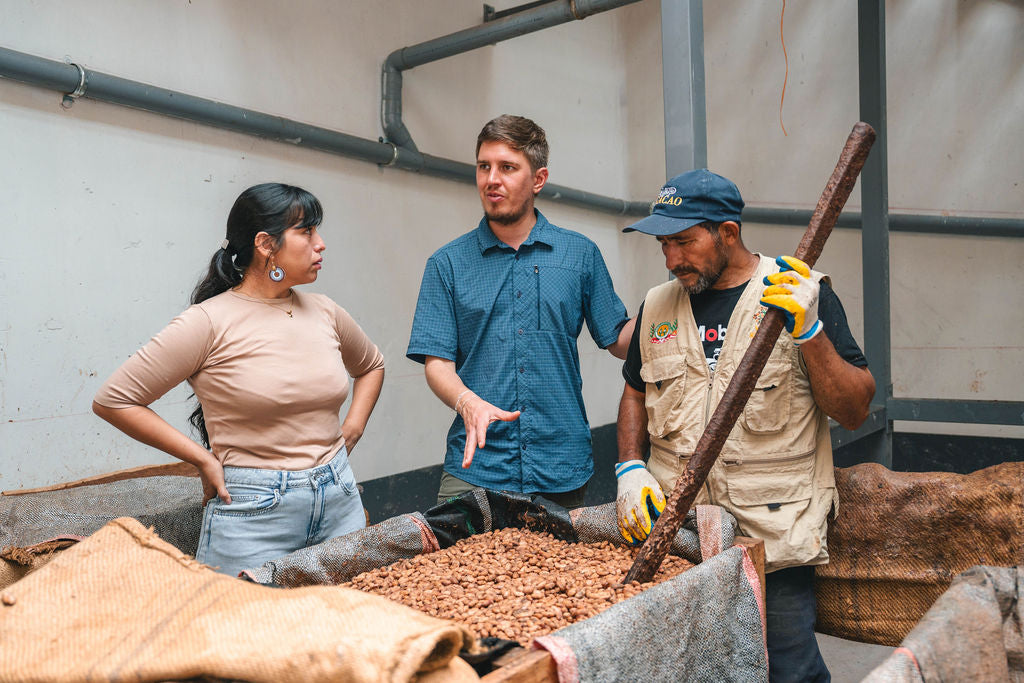
Clean boxes, controlled timing, experience, regular turning and a feel for the process all matter. This is one of the reasons two cacaos can taste completely different even before they become a finished drink.

Drying: slow, clean and decisive
After fermentation, cacao has to dry slowly and cleanly. If drying is too fast, uneven or done in problematic conditions, defects, residual moisture and unstable quality can result. Good drying takes time and attention.
With 100% cacao, this becomes visible. Pure cacao cannot hide behind sugar, milk powder or flavoring. It shows how carefully the chain was handled.

Storage: anonymous bulk or controlled specialty goods
Quality remains fragile after origin. Cacao can be treated as anonymous bulk goods, or as carefully separated specialty cacao with clear traceability. That difference is not logistical luxury. It influences how stable, clean and reliable a raw material remains.


What Moruga does differently
- We work with partners who do not treat cacao as an interchangeable commodity.
- We care about selection, fermentation, drying and storage.
- We explain origin transparently instead of relying only on pretty variety names.
- We make 100% cacao that has to work without sugar or additives.
If you want to understand how this connects to sustainability, read Moruga on sustainable cacao production.
Why you taste the difference
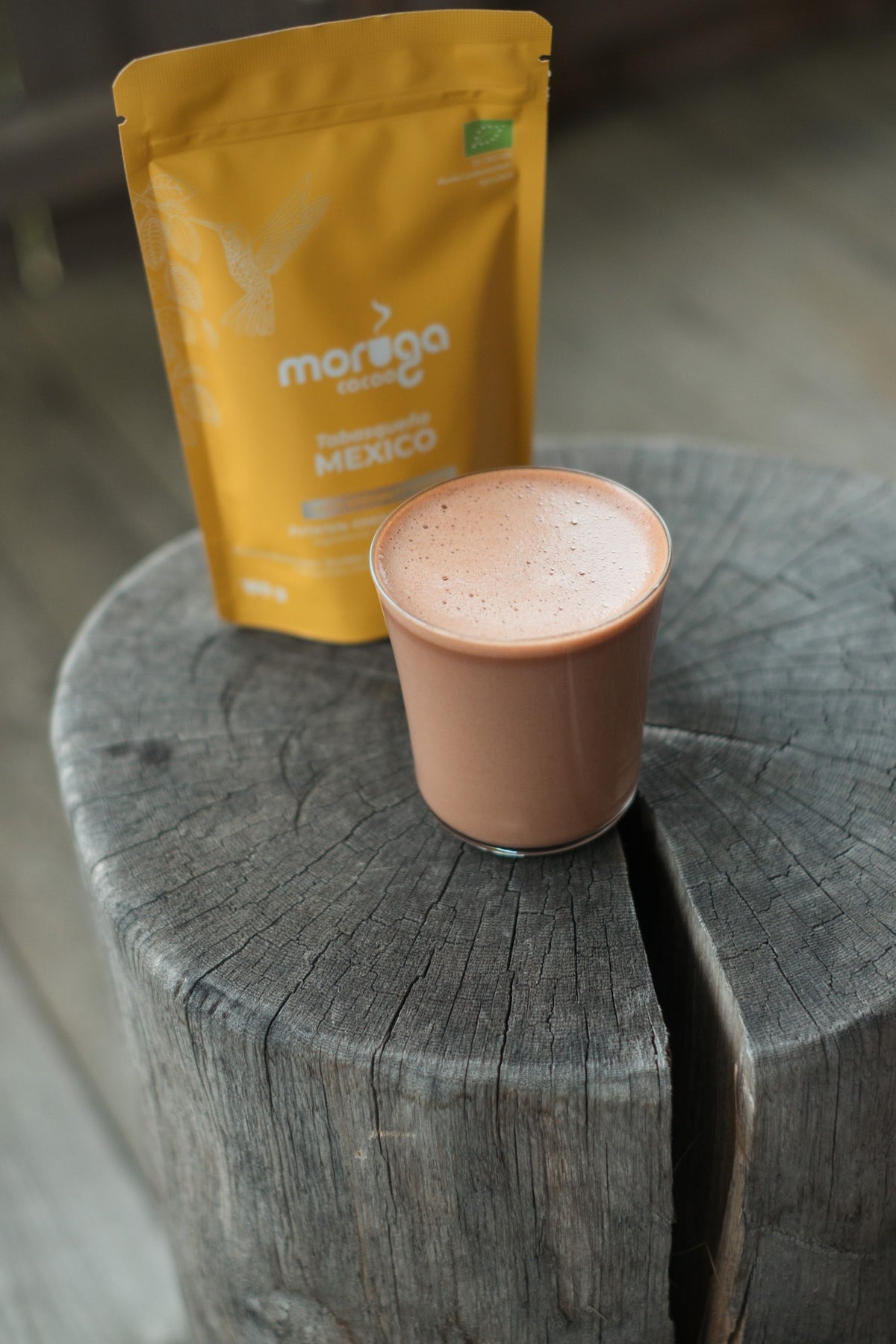
Cacao made from carefully selected, carefully fermented and slowly dried beans tastes clearer, rounder and more complex. It needs less masking. That is why 100% cacao is so uncompromising: it shows not only the bean, but the quality of the whole chain.
If you want to try specialty cacao yourself, start with the Starter Kit or compare all current Moruga cacao varieties.