The Myth of Fat
Many people believe that eating fat automatically leads to weight gain. This myth is stubborn and often causes people to avoid high-fat foods in order to stay slim. But is that really true? In this blog post, we take a closer look at the myth and show why fat is not the villain it is often made out to be.
Instead, you will learn why fat is important in nutrition and how it can even support weight management, especially when you look at ketogenic diets, which have been popularized by well-known figures such as Tim Ferriss and other public personalities.
Let us uncover a few facts about fat and explore whether fat really makes you fat.
High-fat nutrition vs. high-carb nutrition
The ketogenic diet works a little like a switch for your body: it turns up fat metabolism and lets the body use fat as a main energy source. A high-carbohydrate diet, on the other hand, often acts more like a fuel pump for sugar. Keto tends to support stable blood sugar levels and can reduce cravings, while a very high-carb diet can lead to blood sugar spikes and crashes that increase hunger.
So which approach offers the stronger benefits for your health and well-being?
One disadvantage of a very high-carbohydrate diet is that it can lead to strong fluctuations in blood sugar. Carbohydrates can raise blood sugar quickly, which may initially create a rapid increase in energy. This is often followed by a quick drop in blood sugar, which can leave you feeling tired and hungry. This cycle of high and low blood sugar can lead to cravings and make it easier to eat more than your body actually needs. In addition, high amounts of carbohydrates can encourage the body to convert excess carbohydrates into fat and store them, which may contribute to long-term weight gain and other health issues.
So if you do not push fat out of your diet, but consciously include high-fat foods, you may benefit from some of the advantages associated with ketogenic nutrition.
Of course, we are not nutrition coaches and we know that healthy nutrition is highly individual. Here, we simply want to show you some of the real advantages of integrating fat into your diet, in case you have not discovered them for yourself yet. It matters to us to point out that old patterns around high-carbohydrate eating can be worth rethinking.

Cacao in a ketogenic diet
100% cacao contains not only plenty of antioxidants and minerals, but depending on processing, also a generous amount of cocoa butter, which is a valuable source of fat.
In 100% cacao mass, which contains both the solid parts of the cacao bean and the cocoa butter, the cocoa butter share is typically around 50-55%.
If you look at conventional 100% pure cocoa powder, some or all of the cocoa butter is removed, which lowers the fat content to around 10-24%.
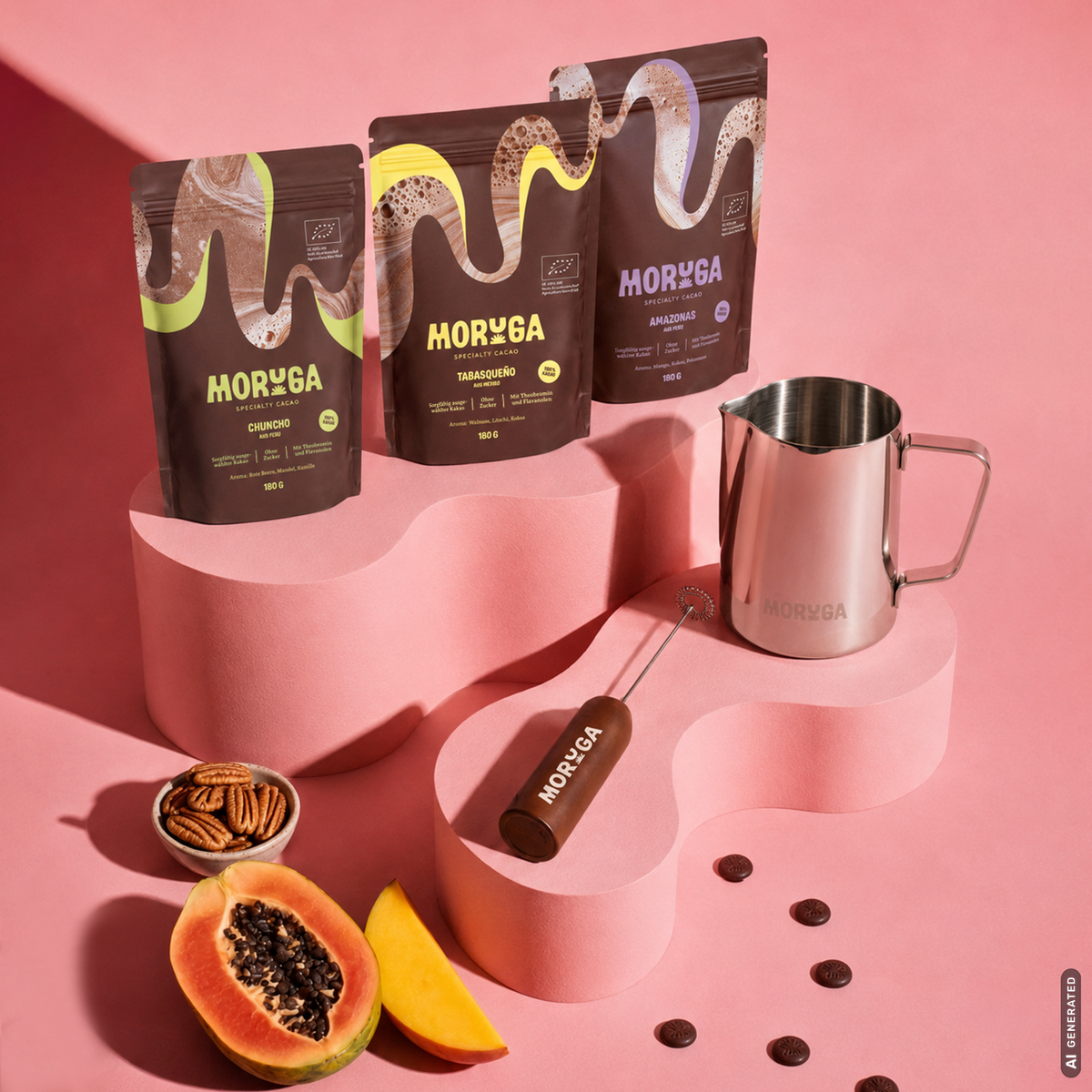
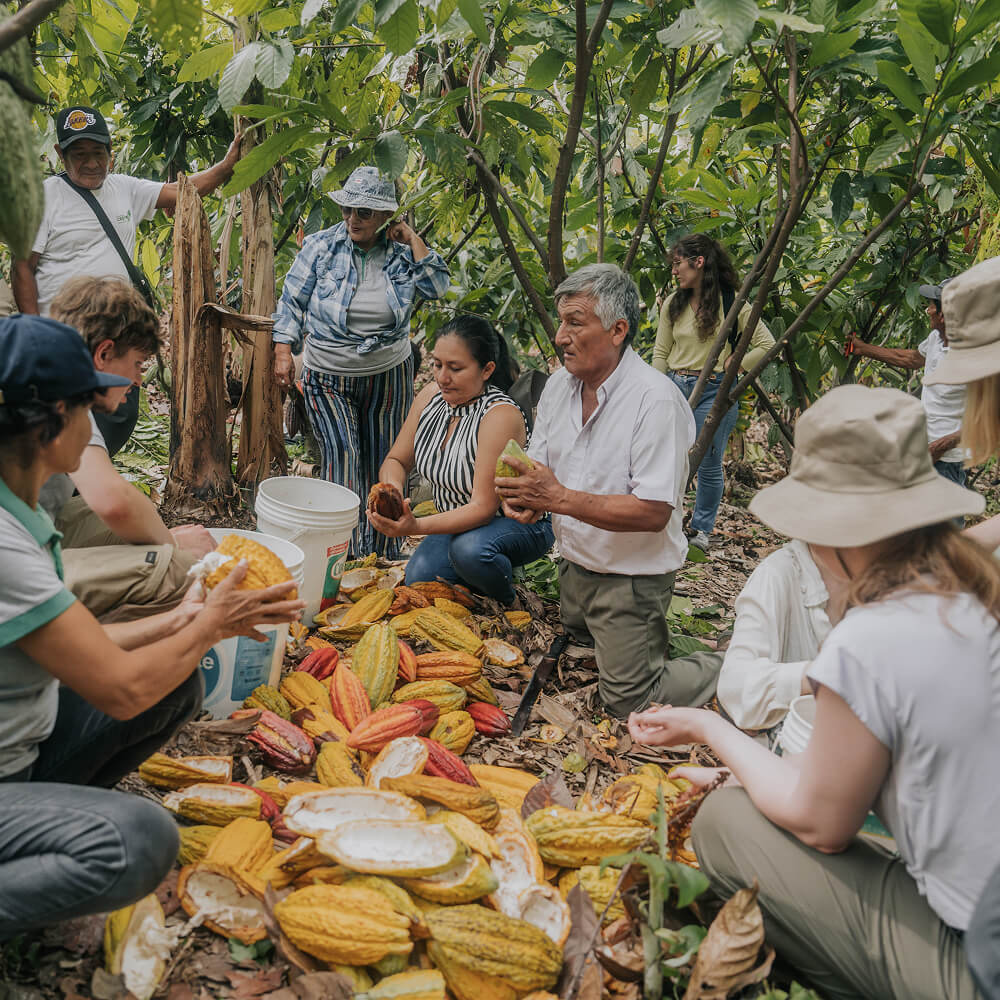
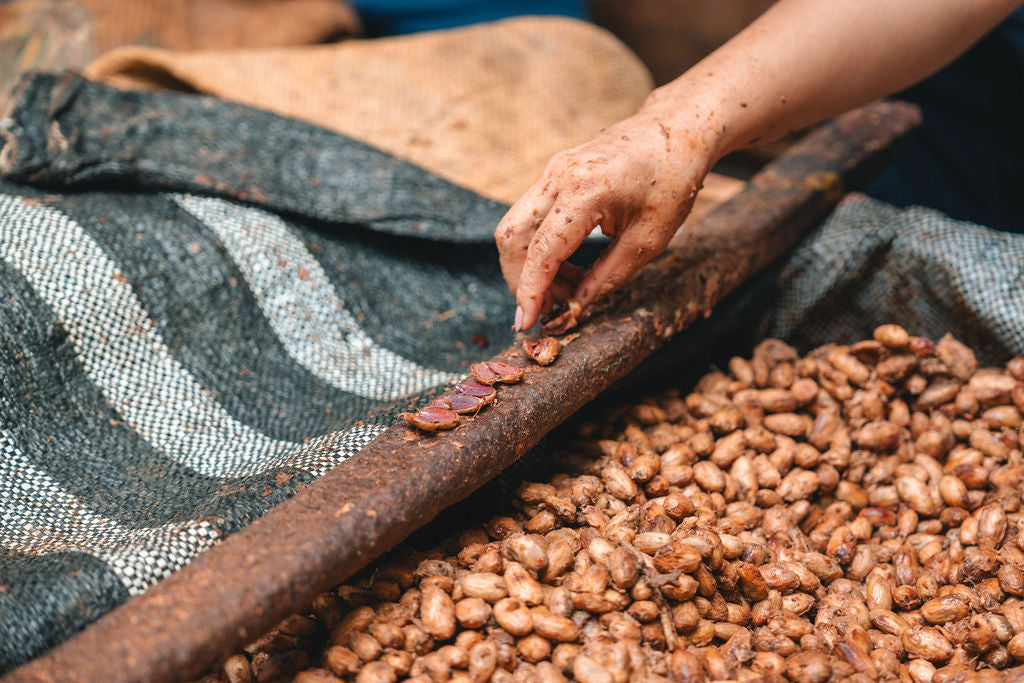
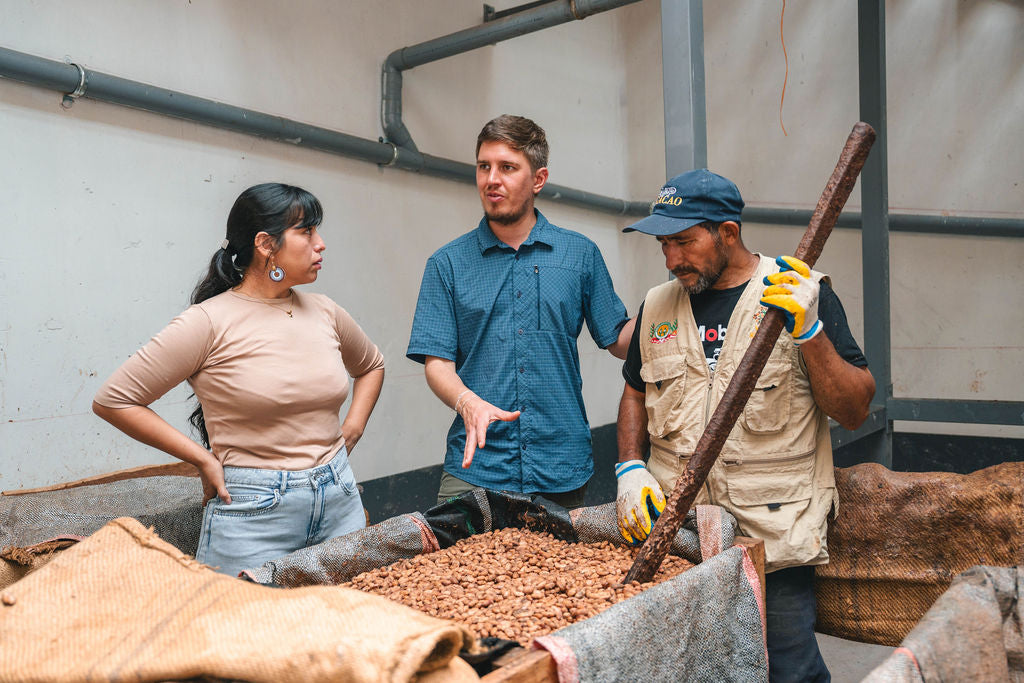
What makes our cacao special is that, in its minimally processed form, it contains around 50% cocoa butter. We only ferment and roast it very gently. If you want to know more about how our cacao is made, have a look at our brochure.

A closer look at cocoa butter
Cocoa butter consists of more than 99% fat, making it an ideal fat source for a ketogenic diet.
It provides a concentrated dose of healthy fats without the additional carbohydrates found in many other foods. The fats in cocoa butter are mainly saturated and monounsaturated fatty acids, including stearic acid, which does not raise blood cholesterol, and oleic acid, which is known for its heart-friendly properties. These fats are stable and can be used efficiently by the body as an energy source, which is especially relevant for maintaining ketosis. Cocoa butter contains practically no carbohydrates, making it a fitting ingredient for ketogenic nutrition. The fats from cocoa butter are digested and absorbed slowly, which can provide steady energy, reduce cravings and increase satiety.

100% cacao and ketosis: a dream team?
100% cacao, especially in the raw and unsweetened form we select, contains not only healthy fats but also many nutrients that can be useful in a ketogenic diet:
- Low carbohydrate content: 100% cacao is low in carbohydrates and therefore well suited to a ketogenic diet.
- Healthy fats: 100% cacao contains healthy fats that can support the body in ketosis and serve as an energy source.
- Rich in antioxidants: the polyphenols in cacao have antioxidant properties that may help reduce inflammation and support overall health.
- Source of magnesium: 100% cacao is a good source of magnesium, which is often low in ketogenic diets and is important for muscle and nerve function.
If you want to learn more, take a look at our other blog post about ketogenic nutrition. 🍫
And if you feel like trying something new, here is a recipe for a vegan bulletproof cacao. ☕️
The ketogenic diet trend
By the way: the ketogenic diet is not something we just happened to discover. Especially in the United States, keto has become a real trend. Alongside the world-famous author and entrepreneur Tim Ferriss, public figures such as Halle Berry, LeBron James, Kim Kardashian, Gwyneth Paltrow, Adriana Lima and Vinny Guadagnino have spoken about positive experiences with ketogenic nutrition. 🌟🌟🌟
Our conclusion
To close, we want to emphasize again that healthy nutrition depends enormously on individual needs. We are not nutrition coaches and we are not calling for weight loss or a permanently ketogenic diet. Our credo: fat definitely deserves a glow-up and, with all its advantages, has become hard to imagine out of a modern diet. ✨🍫🥑🥥✨


Ich habe eine Frage: Wird bei Moruga der Kakao entölt oder ist er nicht entölt (handelt es sich um nicht entölten Cacao.
Vielen Dank im Voraus für eine verbindliche Auskunft.
Freundliche Grüße
Manuela
Hallo Marie, vielen Dank für Deinen Kommentar, den wir gerne zum Anlass nehmen, unseren Blog-Beitrag an der ein oder anderen Stelle zu konkretisieren, um Missverständnissen vorzubeugen.
Unser Ansinnen war es keineswegs, zur dauerhaften ketogenen Ernährung und zum Abnehmen aufzurufen oder gar Kohlenhydrate vollständig zu verteufeln. Im Gegenteil: Wir sind keine Ernährungs-Coaches oder ExpertInnen auf diesem Gebiet. Uns war es ein Anliegen, ein Umdenken dahingehend anzuregen, dass Fett in der Ernährung nicht schlecht sein muss. Vergleicht man die aktuelle Ernährung mit dem, was vor ca. 50 Jahren auf den Tellern gelandet ist, so merkt man, dass neben dem Bewusstsein für vegetarische und vegane Produkte auch eine andere (oft kritische) Wahrnehmung für kohlenhydratreiche Mahlzeiten erfolgt. Daran wollen wir anknüpfen und einen entsprechenden Impuls in Sachen “moderne Ernährung” geben. Wie immer zählt natürlich das große Ganze und damit eine rundum gesunde Ernährung, die für jeden Menschen ganz individuell zu bewerten ist. Tatsächlich erreichen uns immer wieder Anfragen zur Eignung von Kakao in der ketogenen Ernährung. Daran merkt man, dass es doch ein Thema ist, das viele Menschen interessiert (Gerade weil es viele prominente Menschen gibt, die von positiven Erfahrungen damit berichten. Deshalb haben wir diesen Bezug hier aufgegriffen.)
Selbstverständlich ist die Art und Weise der Ernährung höchst individuell zu betrachten und nicht jeder muss einen Gefallen an der ketogenen Ernährung finden. Die Vorteile, die eine bewusst fettreiche Ernährung bieten kann, sind nicht von der Hand zu weisen, weshalb wir uns gerne dazu geäußert haben. Wir hoffen, unser Ansatz wird damit etwas klarer.
Schade, dass ihr Promis und die Themen Abnehmen und Schlanksein für das Promoten von Kakao benutzt. Ketogene Ernährung ist auf Dauer nicht gesundheitsförderlich. Der Körper ist dafür gemacht KH zu verbrennen. Es gibt keinen professionellen Sportler, der in Ketose Leistung bringen kann. Kakao ist ein vollwertiges, gesundes Lebensmittel. Fette sind gesund und wichtig. Aber die Darstellung hier ist einfach unpassend für mich und passt nicht zu dieser so speziellen Kakaopflanze. Schade
Leave a comment