Sustainable cacao farming can sound like a large promise. It becomes useful only when it gets concrete: how cacao grows, how the soil is treated, whether shade trees and mixed crops are part of the system, and how transparent the supply chain is.
This guide explains why agroforestry and mixed forest systems matter for cacao and why sustainability should not be separated from quality.
Why cacao should not be treated like a simple monoculture
Cacao is a tree crop that often benefits from shade, living soil and a diverse growing environment. In a monoculture, farming may look easier to control, but the system can become more vulnerable: soils can lose life, pests can spread faster and climate stress can become harder to buffer.
What agroforestry means in cacao
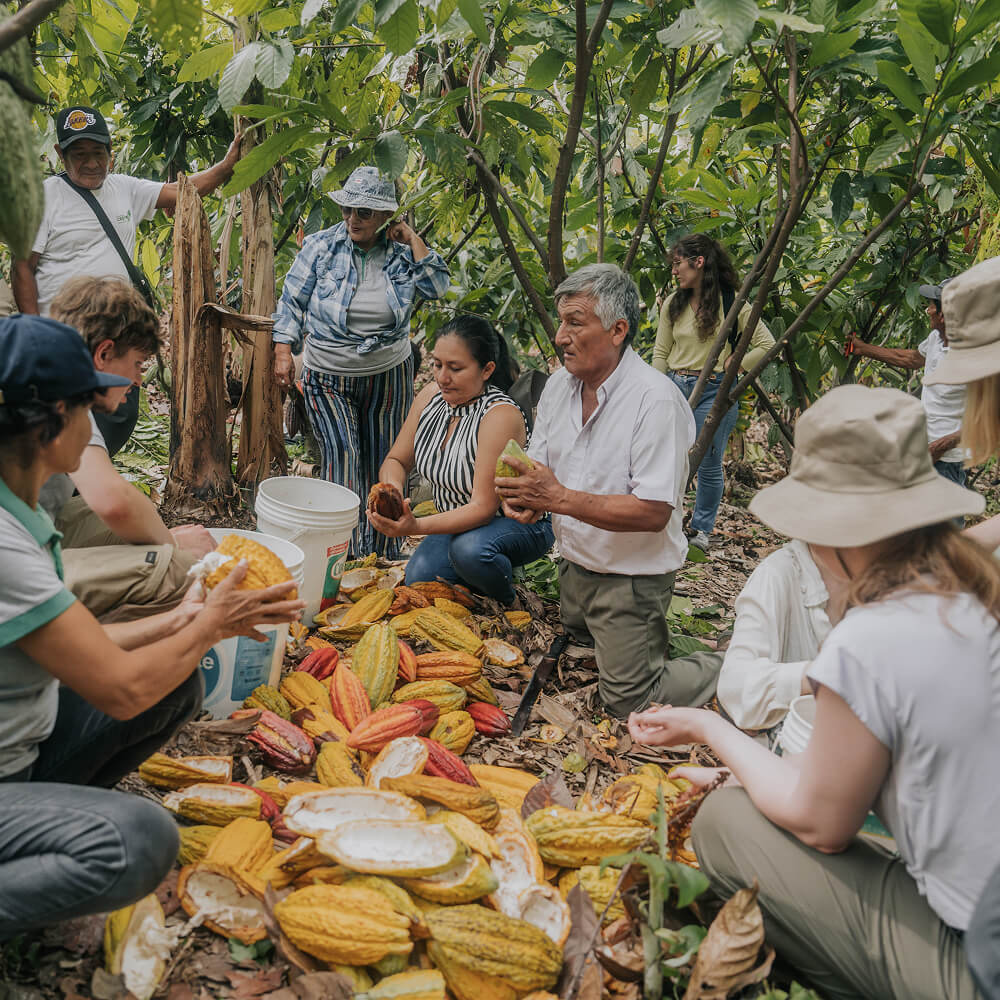
Agroforestry means that crops and trees are planned together on the same land. In cacao, that can include shade trees, fruit trees, useful plants and natural vegetation. The result is a more complex system that can support soil, microclimate and biodiversity better than a simple monoculture.
- Shade trees can protect cacao from extreme sun and heat.
- Different plant species can create a more stable ecosystem.
- Living soil can hold water better over time.
- Additional plants can give farming families more than one source of food or income.
Why mixed forests are also a quality signal
When cacao is treated as an anonymous commodity, production often optimizes for volume. When cacao is treated as a food with origin, flavor and responsibility, the growing system matters more.
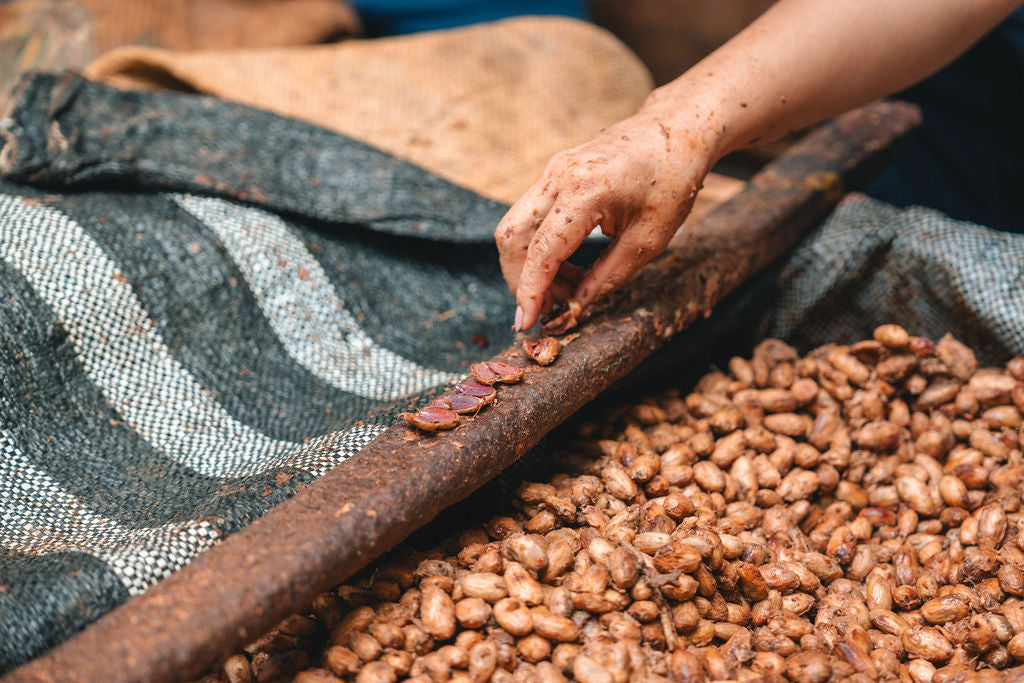
Agroforestry does not automatically make every cacao excellent, but it is one signal that the raw material is being taken seriously. Fermentation, drying and roasting still decide a lot, but the story begins on the farm.
What to check when buying cacao
If you want to buy 100% cacao, look for substance rather than vague green language:
- Ingredients: 100% cacao, no sugar, no flavoring and no filler.
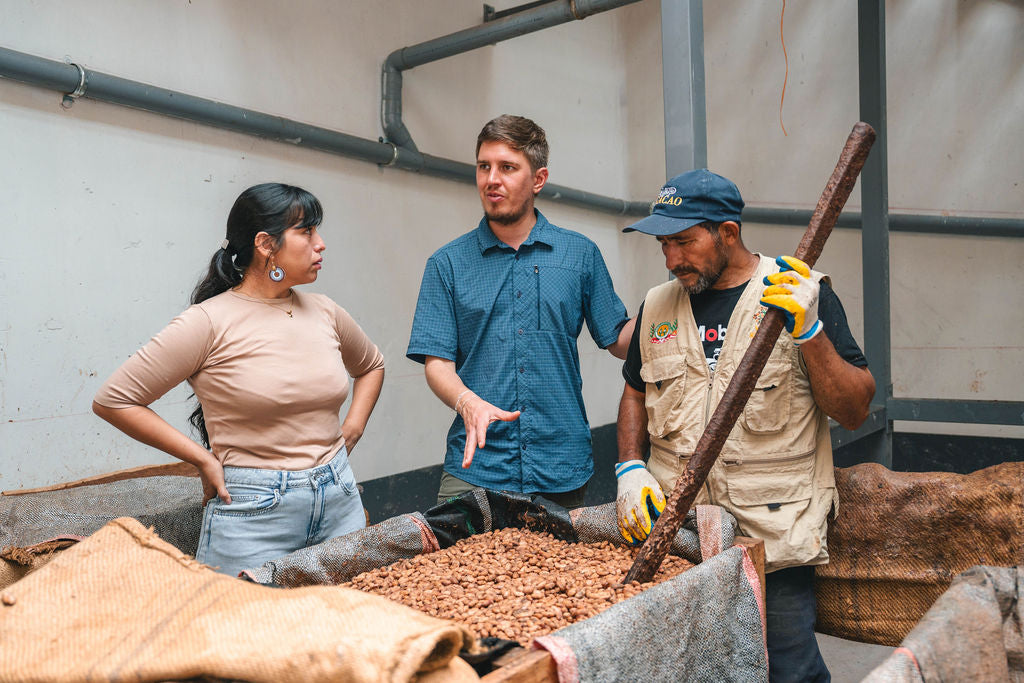
- Origin: clear origin information instead of anonymous bulk cacao.
- Processing: fermentation, drying and roasting shape quality.
- Transparency: lab tests and open information are stronger than broad claims.
- Availability: real origins can sell out, so an overview can be more useful than one fixed product link.
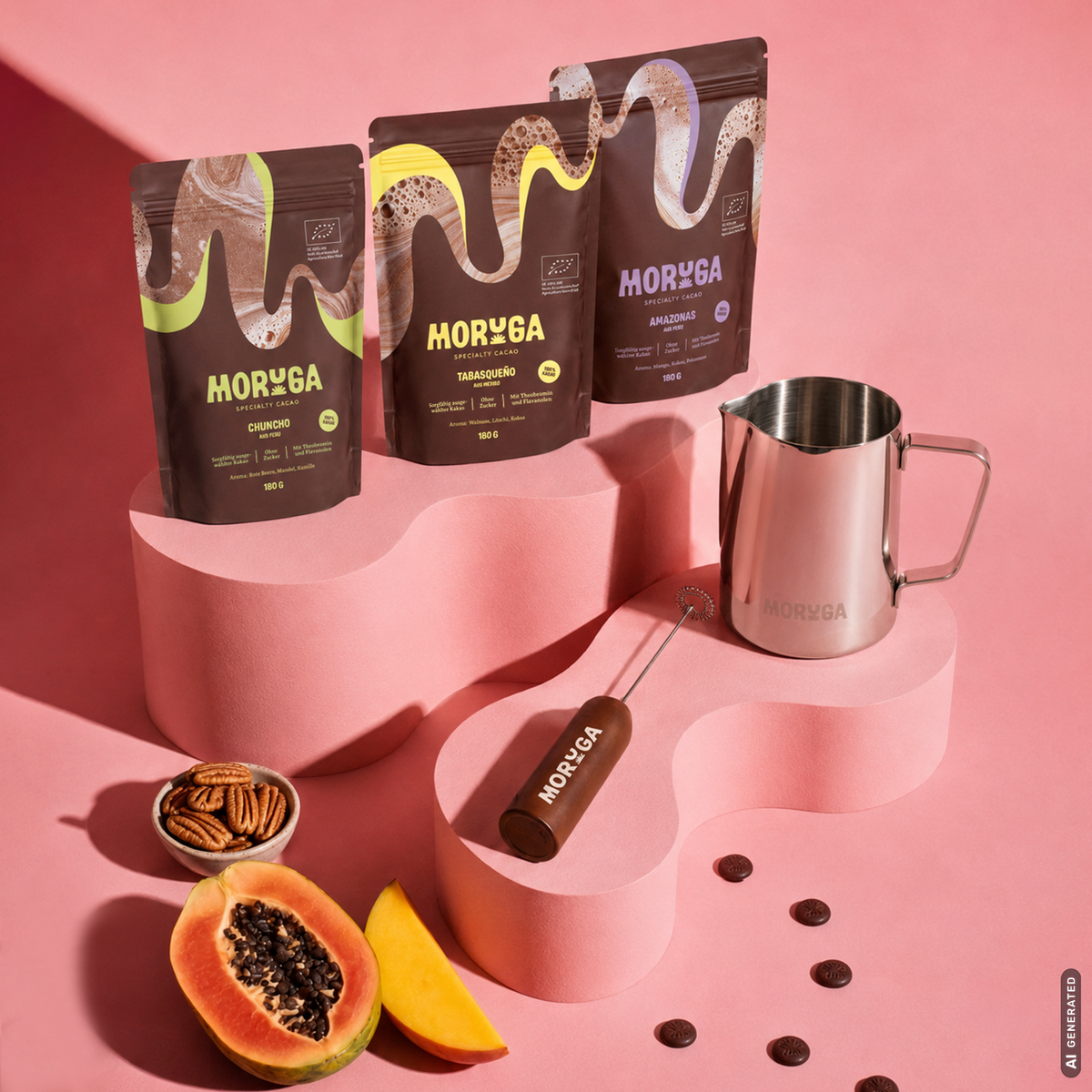
For the current range, start with Moruga cacao varieties. If you want to compare several profiles, use the Starter Kit.
Moruga's view on sustainable cacao
Moruga treats cacao as real food: 100% cacao, no added sugar, clear origin and as much transparency as possible. Sustainability is not a separate marketing layer. It is connected to taste, origin, supply relationships and quality control.
For more context, read sustainability in cacao, specialty cacao vs. commodity cacao and Moruga's take on sustainable cacao production.
Conclusion
Sustainable cacao farming is strongest when it becomes specific: agroforestry, mixed forests, origin transparency, careful processing, lab transparency and a cup that tastes good without sugar.
For related buying criteria, read pure cacao without sugar and heavy metals and lab values in cacao.