Ceremonial cacao is not a protected term. That is why it is worth looking closely: what does a brand mean by it, what is actually in the product, and how can you tell whether a cacao is pure, high-quality and useful for your own ritual?
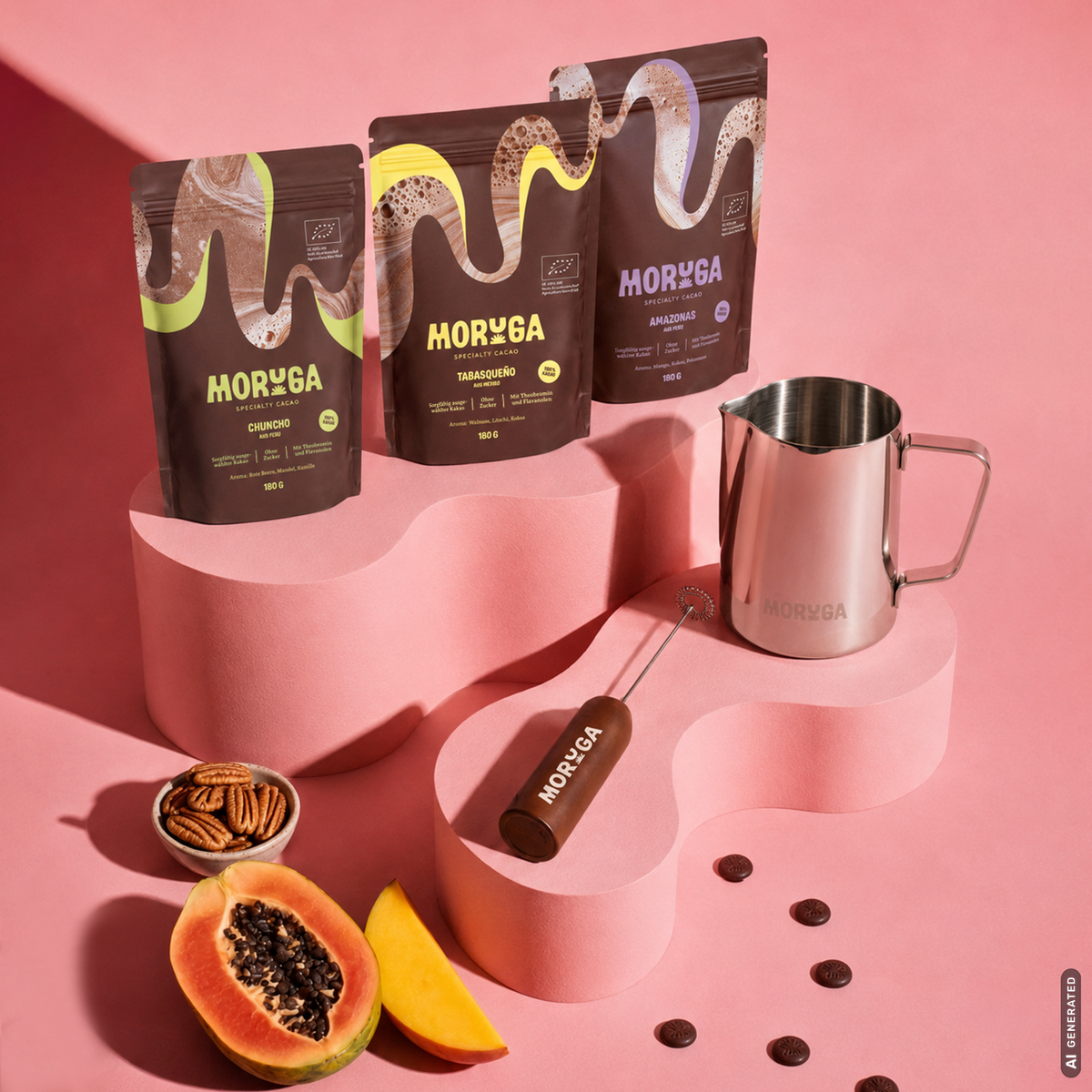
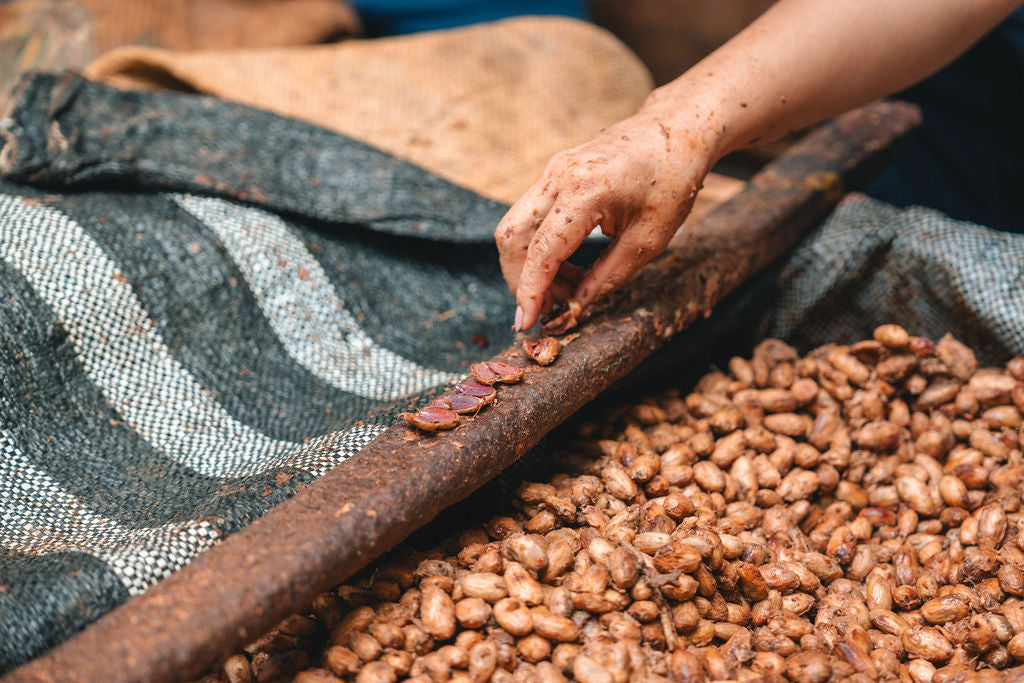
At Moruga, we use the term ceremonial cacao for 100% cacao: cacao beans that are fermented, dried, roasted, shelled and ground into a fine cacao mass. No sugar, no flavoring, no powder blend. The key difference is the whole cacao mass and its natural cacao butter.
Ceremonial cacao is 100% cacao mass
The basic ingredient is cacao mass. It is made when cacao nibs are ground until they become a dense, smooth paste. Because cacao beans naturally contain cacao butter, this mass becomes creamy when warmed and can be prepared as a full-bodied cacao drink.
This is very different from classic cocoa powder. We explain the difference in cocoa powder vs ceremonial cacao.
What makes cacao ceremonial?
Because the term is not officially regulated, it should not be taken as a quality guarantee on its own. A cacao does not become better because it is described spiritually. What matters are concrete criteria:
- 100% cacao instead of a sugar or powder mix.
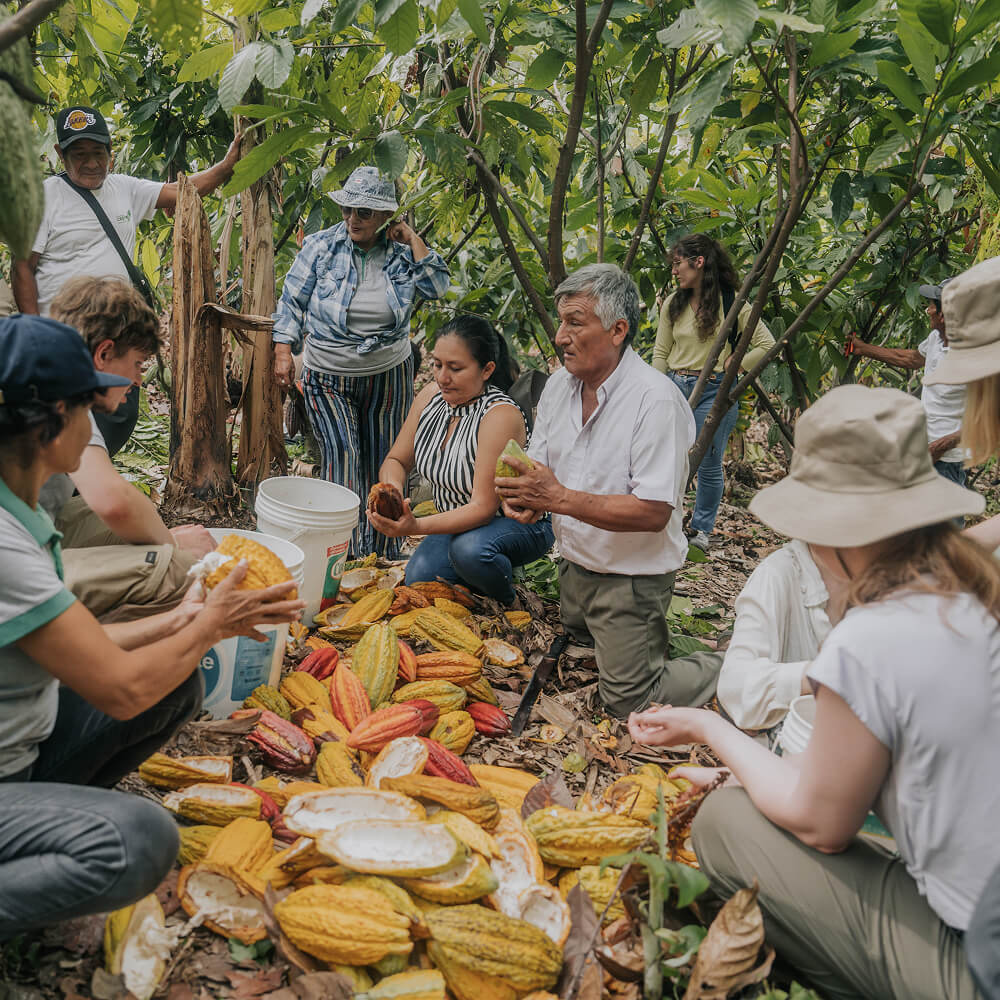
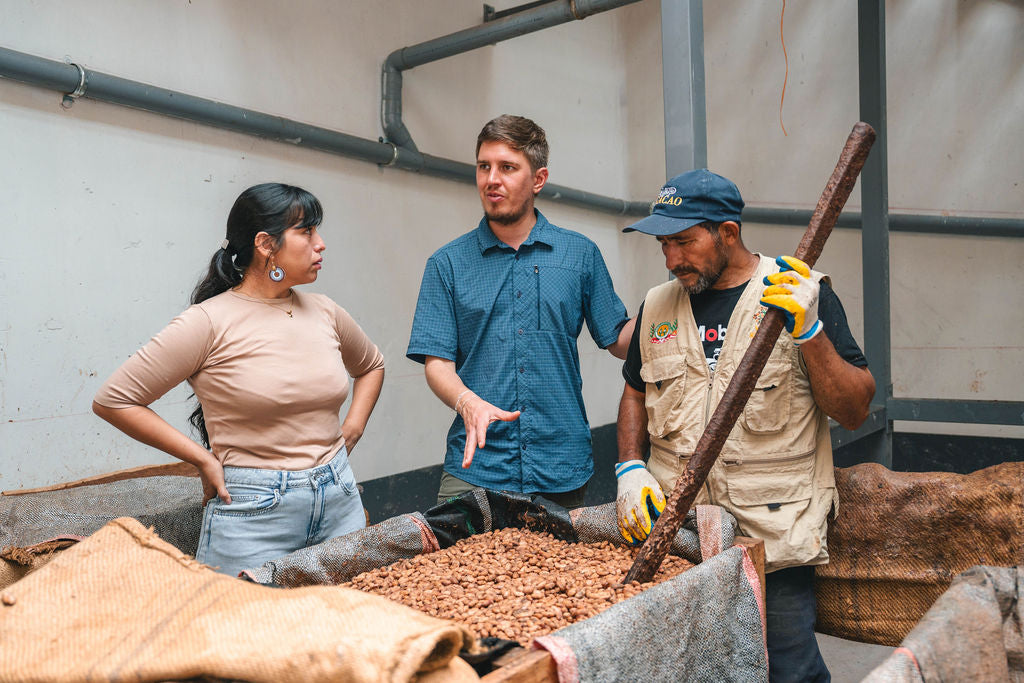
- Traceable origin and careful processing.
- Pleasant flavor, not just bitter intensity.
- Transparent quality and lab information.
- Preparation that can be conscious and still fit into daily life.
For the buying decision, read buy ceremonial cacao.
Preparation: water, cacao, warmth and texture
Ceremonial cacao is usually prepared with hot water or plant drink. The important part is that the cacao melts and emulsifies well. You do not need complicated equipment, but you do need enough warmth, movement and patience.
As a simple guide, 15 to 25 g works for a milder cup and 25 to 35 g for a more intense one. For practical preparation, read how to prepare Moruga cacao.
How can ceremonial cacao feel?
Many people describe cacao as warm, soft and gently stimulating. This is partly related to compounds like theobromine and small amounts of caffeine. But cacao is not a medical product and not a health promise. How you experience it depends on amount, sensitivity, food, timing and preparation.
If you are looking for cacao as an alternative to coffee, read cacao instead of coffee. If you are sensitive to stimulants, see our overview on caffeine in cacao.
What to look for when buying
Good ceremonial cacao does not need to be sold with mystery. It should be understandable. Look for a short ingredient list, clear origin, transparent quality information and real 100% cacao.
Because individual origins can sell out, an overview is often more useful than a single product link. Compare the current range on Moruga cacao varieties. If you want to try several profiles first, use the Moruga Starter Kit.
Quality also means transparency
With 100% cacao, taste and ritual are only part of the picture. Origin, processing and analysis matter too. That is why we publish Moruga lab tests and explain topics like heavy metals in cacao instead of hiding them behind soft marketing language.
For a broader buying guide, read buy cacao or pure cacao without sugar.
Conclusion
For us, ceremonial cacao means 100% cacao with a conscious standard: pure, aromatic, transparent and well prepared. You do not need to turn every cup into a big ceremony. Sometimes a quiet morning cup or a calm moment after a meal is enough.