Cacao has a long history. Before it became sweet chocolate in Europe, cacao was an important drink, trade good and culturally meaningful food in Mesoamerica. That history is fascinating, but it deserves careful language: not every modern cacao moment is automatically an ancient ritual.
This article gives a compact overview. If you are looking specifically for modern cacao ceremonies, also read the history of cacao ceremonies.
Cacao in Mesoamerica
Cacao was used in different Mesoamerican cultures long before it arrived in Europe. It was consumed, traded and used in social or ritual contexts. The details changed by time, region and culture.
That matters because the story is more complex than a romantic marketing image. Cacao was food, drink, status symbol, trade good and cultural product at the same time.
Maya, Aztecs and xocolatl
The Maya and Aztecs are often mentioned in cacao history. Both are associated with cacao drinks, often bitter and prepared with water, spices or chili. Through many historical steps, this later became part of European chocolate culture.
The key difference from modern drinking chocolate is simple: historical cacao drinks were not the sweet instant drink many people know from childhood. They were closer to what we now understand as intense 100% cacao: strong, bitter, aromatic and taken seriously as a drink.
From cacao drink to sweet chocolate
Through colonial history, cacao reached Europe and was increasingly combined with sugar and milk. That made chocolate more accessible, but also moved it away from the bitterness and intensity of the cacao itself.
Today, many people experience 100% cacao as a counter-movement: less sugar, more raw material, more origin and more aroma. For the difference, read pure cacao without sugar and cocoa powder vs. ceremonial cacao.
What does this mean for modern cacao ceremonies?
Modern cacao ceremonies often reference this long history. That can be meaningful when the language stays honest. A ceremony in Berlin, Zurich or Vienna is not automatically identical to historical rituals in Mesoamerica. It is a modern practice with an old food.
For a grounded view, read what ceremonial cacao is, ethical considerations in cacao ceremony and how to buy ceremonial cacao.
Why 100% cacao is relevant today
If you take cacao seriously as a drink, you quickly arrive at 100% cacao: no sugar, no flavoring, no milk powder. That does not make it automatically historically authentic, but it brings you closer to the raw material itself.
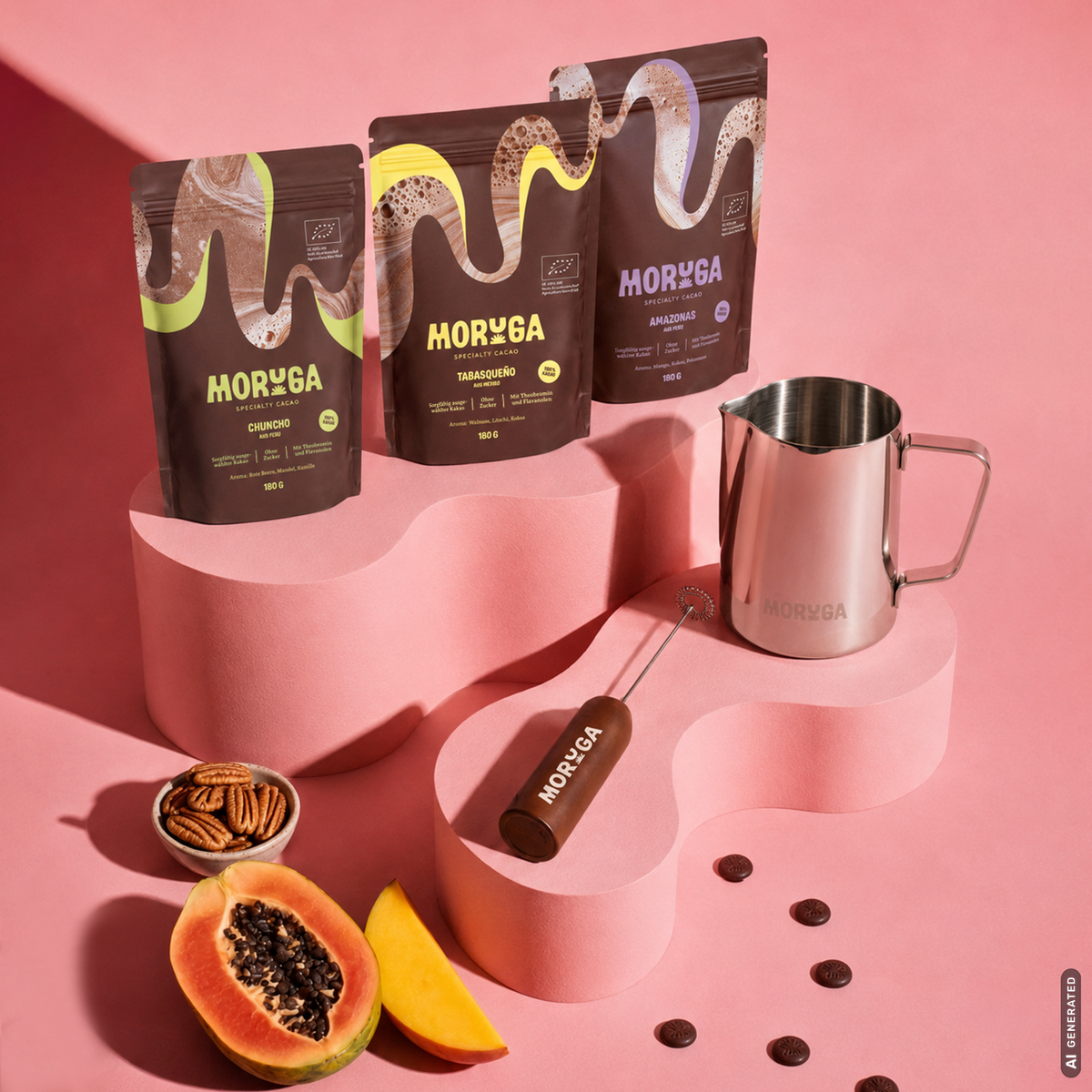
Compare the current Moruga cacao varieties, try the Starter Kit, or read Moruga lab tests if you want to understand quality and transparency.
Conclusion
The history of cacao is rich enough that it does not need exaggeration. For Moruga, it means that cacao deserves respect as a food, a drink and a culturally grown raw material.
To move from history into practice, read how to prepare Moruga Cacao or how to buy 100% cacao.